
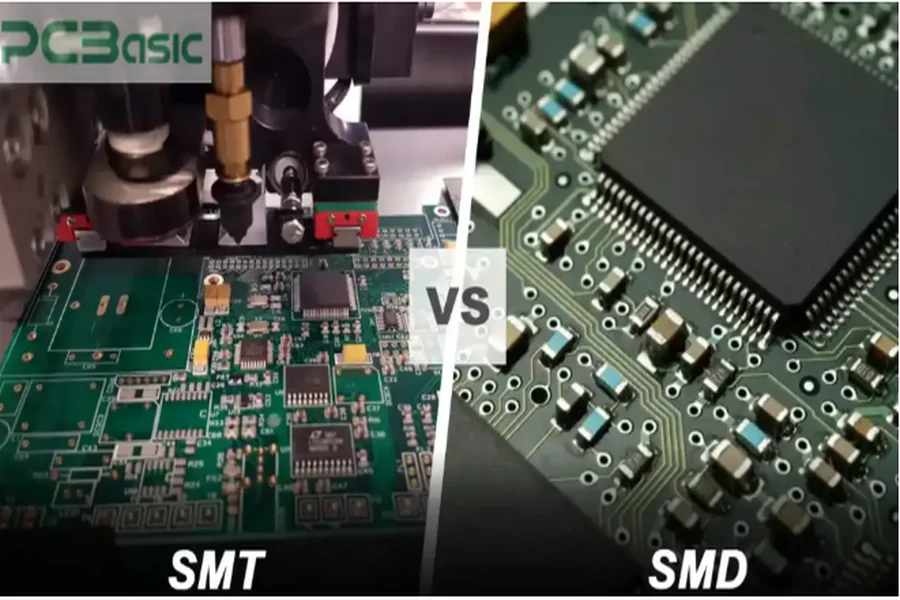
In the world of electronics manufacturing, Surface Mount Technology (SMT) is the standard for producing compact, high-density circuit boards. While SMT is often associated with mass production, small-batch PCBA (Printed Circuit Board Assembly) projects are becoming increasingly common — especially for prototyping, R&D, custom products, and high-mix, low-volume manufacturing.
But here’s the challenge: small-batch production doesn’t mean lower quality expectations. In fact, it often demands even tighter process control, flexibility, and precision. To succeed, manufacturers must master SMT techniques specifically optimized for low-volume runs.
Let’s explore how to achieve precision, reliability, and cost-efficiency in small-batch PCBA using advanced SMT practices.
1.Why SMT Matters in Small-Batch PCBA
While the order volume may be lower, the complexity of boards used in medical devices, industrial controls, IoT modules, and aerospace applications often remains high. SMT enables:
- Compact designs with dense component placement
- Greater performance through shorter signal paths
- Efficient automated assembly, even at low volumes
Mastering SMT in small batches means combining flexibility with consistency — a balance that requires both skilled technicians and smart process design.
2. Optimized Stencil Design for Precision Printing
Solder paste printing is the first critical step. In small-batch SMT, custom boards with diverse pad sizes and component types are common. To reduce defects like solder bridges or insufficient paste:
- Use stepped stencils for varied component heights
- Adjust aperture ratios to control paste volume per pad
- Validate paste printing with SPI (Solder Paste Inspection) for every batch
For short runs, stencil setup time must also be minimized. Quick-change frame systems or laser-cut stencils can improve turnaround time.
3. Flexible Pick-and-Place Programming
Each small-batch job may involve different component libraries, BOMs, and layouts. To maintain efficiency and reduce errors:
- Use intelligent pick-and-place machines that support rapid job changeovers
- Implement vision systems for auto-alignment and rotation correction
- Train operators on fine-pitch and irregular-shaped component handling
For very small batches or prototypes, hybrid workflows (manual + automated) may be necessary to reduce cost without compromising quality.
4. Reflow Soldering Tailored to Each Board
In small-batch PCBA, different boards often require different thermal profiles. Instead of using a fixed curve:
- Use profile simulation software to plan reflow settings
- Conduct profiling for each new board to prevent defects like tombstoning or voids
- Select nitrogen reflow for sensitive or high-reliability assemblies
A well-executed reflow process ensures uniform solder joints and protects component integrity.
5. 100% Inspection with AOI and Manual Verification
With lower production volumes, there’s no room for defects slipping through. A mix of automated and manual inspections should be applied:
- AOI (Automated Optical Inspection) for checking component placement, polarity, and solder quality
- Manual visual checks for unique or irregular components not covered by AOI
- For BGA and QFN packages, use X-ray inspection to identify hidden issues like voids or bridging
Inspection data can also be used for real-time SPC (Statistical Process Control), even in small runs.
6. Real-Time MES and Documentation for Traceability
Small-batch orders often come with special requirements for traceability and documentation. Implementing MES (Manufacturing Execution System) tools allows:
- Real-time tracking of SMT line data
- Batch-level defect logging and feedback
- Full traceability of materials and process parameters
This is especially critical in industries like medical, automotive, and aerospace, where regulatory compliance is required.
7. Engineering Agility and Fast Changeovers
Finally, one of the most important SMT capabilities in small-batch PCBA is agility:
- Quick NPI (New Product Introduction) cycles
- Minimal setup time between jobs
- On-the-fly adjustments without compromising process stability
A well-trained SMT team, supported by flexible equipment and strong engineering processes, can dramatically reduce time-to-market.
Conclusion: Precision Beyond Volume
Mastering SMT techniques for small-batch PCBA production isn’t about scaling down mass production. It’s about scaling up precision, flexibility, and control to meet the needs of complex, high-mix electronics, no matter the order size.
At PCBasic, we specialize in combining Class 3-level SMT quality with efficient small-batch workflows, helping our customers deliver reliable, high-performance electronic products with confidence.
