
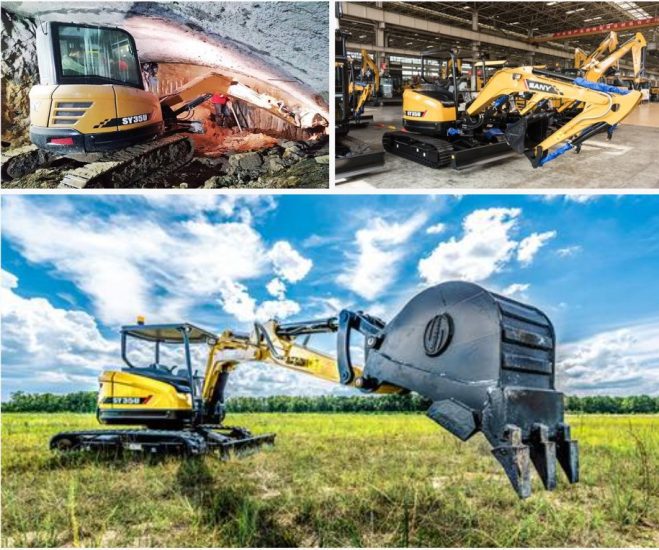
A mini excavator is a little machine with powerful capabilities that make it suitable for a wide range of activities. The compact excavator is adaptable and extremely mobile, making it ideal for small building sites, landscaping projects, and maintenance work. Its compact size allows it to fit in confined locations where heavier apparatus would not. This makes it an excellent resource for professionals, landscapers, and homeowners alike. Understanding its features and applications allows you to decide how to use it most effectively in your own projects.
Why Choose a Mini Excavator Over Larger Machines?
Mini excavators are frequently preferred over bigger models owing to their versatility and ease. They are more agile, allowing them to go into tight or difficult-to-reach spaces where larger machinery might struggle. Their lower size also lessens the impact on fragile surfaces, making them perfect for urban or residential applications. Additionally, mini excavators are more cost-effective to operate, requiring less fuel and maintenance. They can perform many of the same tasks as larger machines but at a fraction of the cost, making them an excellent option for small-scale and budget-conscious projects.
What Are the Key Uses of a Mini Excavator?
Digging and Excavation
Mini excavators’ robust hydraulic systems and assortment of attachments enable them to do excavating jobs with ease. For trenching, foundation excavation, or making holes for posts and other structures, they are ideal. Mini excavators are frequently used for excavation in urban settings where larger machines would not be practical due to their capacity to operate in tight places. They are the preferred choice for excavating small to medium-sized holes due to their accuracy and effectiveness, which lowers labor costs and boosts output.
Demolition Tasks
Mini excavators are well-suited for demolition work because they may be equipped with hydraulic breakers and crushers, which allow them to crush and break through a variety of materials. They are perfect for destroying tiny buildings or hard surfaces in confined areas because of their small size and powerful digging capacity. A tiny excavator is an indispensable equipment for home renovations and site clearing projects since, with the correct attachment, it can swiftly deconstruct small buildings or remove trash.
Trenching for Utilities
Mini excavators are a common tool for installing utilities like pipelines, electrical cables, or water lines. Because of their small stature, they are able to operate in confined spaces without causing any damage to nearby buildings or landscape. They are also capable of digging trenches to exacting depths, which is necessary for the accurate installation of utilities. Mini excavators are the go-to for utility contractors who want their projects done quickly and with little environmental impact because of how well they can navigate tight spaces and avoid impediments.
How Can You Maximize the Use of a Mini Excavator?
Attachments and Tools for Versatility
A number of attachments can be used to fully utilize a mini excavator’s capabilities. Buckets, augers, grapples, and hydraulic hammers are examples of popular equipment that allow operators to do a broad range of tasks such as digging, trenching, breaking concrete, and carrying objects. The little excavator is a versatile equipment that can handle a variety of construction, landscaping, and demolition tasks. It can handle a range of jobs since it can be outfitted with the proper attachment for each one.

Operator Tips for Efficiency
The key to using a small excavator efficiently is using the right operating procedures. Operators should make sure they know how to operate the machine and are aware of its limitations. This involves keeping a constant speed to avoid putting undue stress on the hydraulics and engine. Additionally, operators should utilize the right attachments for the job at hand and properly place the mini excavator to save needless movement. Maintaining the equipment properly and operating it in accordance with best practices will guarantee optimal performance and lifespan, which will eventually boost output and save operating expenses.
Ideal Projects for Mini Excavators
Mini excavators are ideal for projects requiring accuracy and flexibility in limited locations due to their versatility. This category includes activities such as gardening, small-scale construction, site preparation, and utility installations. Homeowners may also use them to excavate yards, level the ground, or remove small sections for use as garden beds or fences. Their versatility makes them ideal for use in both residential and commercial building projects. To determine if a tiny excavator is the best tool for the job, the project’s requirements must be properly evaluated.
Conclusion
A tiny excavator’s versatility, efficiency, and convenience make it suitable for a variety of tasks. Excavating, demolition, utility trenching, and site preparation are among the tasks assigned. Because of its tiny size and ease of movement, it is a good choice for activities that require working in confined spaces. Furthermore, its adaptability to a range of attachments allows it to expand its capabilities. The usage of a compact excavator may allow you to complete work more quickly and effectively, saving you time and money. This applies whether you are a contractor or a homeowner.
