
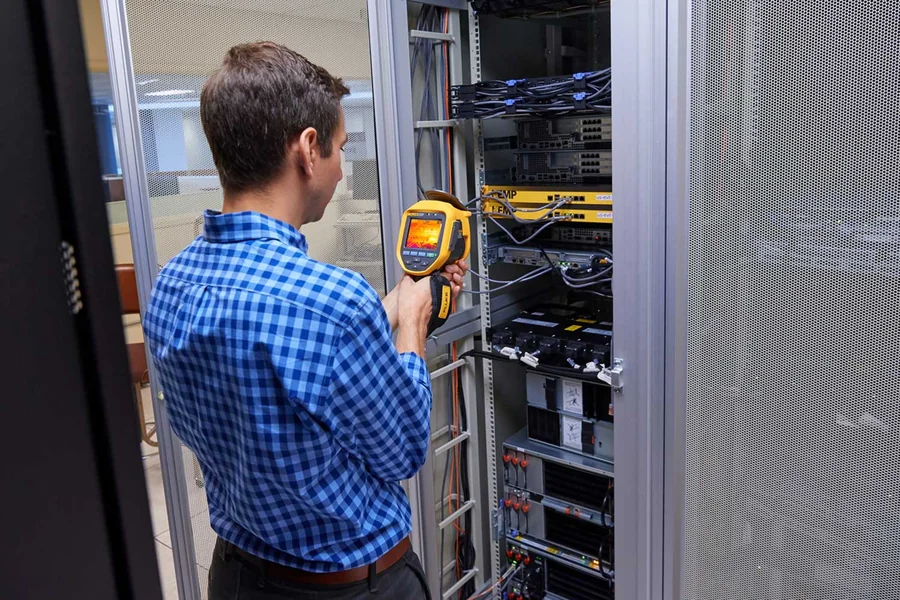
In the age of digital transformation, data is the backbone of every industry — from healthcare and banking to education and entertainment. All this data must be stored, processed, and accessed quickly and securely, and that’s made possible by powerful computer systems housed in facilities known as data centers. These centers are the invisible force behind our internet browsing, online payments, cloud backups, and video streaming. However, there’s one crucial aspect of data center management that remains out of the spotlight but is absolutely essential to keeping the digital world functioning: temperature control. In the quest for optimal thermal management, data centers are increasingly turning to innovative solutions that ensure efficiency and reliability. One such approach involves collaborating with specialized service providers like BIM Heating and Cooling near Fredericksburg, who offer tailored solutions to meet the unique demands of these facilities. By leveraging advanced cooling technologies and expert maintenance services, data centers can significantly reduce energy consumption and enhance system performance. This partnership not only helps in maintaining the ideal temperature but also extends the lifespan of critical equipment, ensuring seamless operations in an ever-evolving digital landscape.
The growing density of hardware in data centers has created a significant challenge. High-performance servers generate a tremendous amount of heat. If not managed properly, this heat can compromise performance, damage sensitive components, and ultimately lead to downtime — which can cost businesses millions of dollars in lost productivity and services. Therefore, advanced and efficient temperature regulation systems are not just an option — they are a necessity.
This brings us to a key element of operational infrastructure: data center cooling. While the keyword is simple, the science and strategy behind it are vast and constantly evolving.
Why Temperature Control Matters in Data Centers
Servers and networking equipment in data centers are designed to operate within specific thermal ranges. Once the environment exceeds those limits, the risk of hardware failure, data corruption, or system shutdown increases. This can have devastating consequences — especially for industries that rely on real-time data processing like finance, health care, or e-commerce.
Even a few minutes of server downtime can result in serious losses, both financially and reputationally. According to Uptime Institute, the average cost of a data center outage has surpassed $500,000, with some large-scale incidents costing over $1 million. These figures emphasize how critical proper temperature management is to data center continuity and performance.
The Physics Behind Heat Generation
To understand the cooling process, it’s essential to know where the heat comes from. Most of it originates from the servers’ internal components — CPUs, GPUs, memory modules, and power supplies — as they perform tasks like computation, data retrieval, and traffic routing.
Each watt of power consumed by a server eventually turns into heat. In a large-scale facility that houses tens of thousands of servers, the cumulative heat load can reach megawatt levels. This is why a significant portion of a data center’s operating budget is allocated to its cooling systems.
Traditional Cooling Methods
Historically, air-based cooling was the go-to method for maintaining temperature within acceptable limits. This involves pushing cold air through raised floor systems or overhead ducts to cool the front of server racks, while hot air is exhausted from the rear and removed by HVAC systems.
While this method is still widely used, it has limitations. Air is not the most efficient medium for transferring heat, especially in high-density setups. Moreover, air-based systems often require large amounts of electricity to maintain temperature across wide areas, making them expensive and energy-intensive.
Advanced Cooling Techniques
To improve efficiency and sustainability, many modern data centers are now adopting more innovative approaches. These include:
1. Liquid Cooling
Unlike air, liquids can absorb and transport heat more effectively. In liquid cooling, coolants are circulated through pipes or coils that come into contact with hot components. Some systems even submerge servers entirely in dielectric fluids (a process called immersion cooling) that draw away heat instantly.
This technique allows for much greater heat dissipation and is ideal for data centers that deal with high-performance computing, such as those supporting AI or blockchain operations.
2. Chilled Water Systems
These systems use water chilled to low temperatures and pumped through cooling coils to regulate the temperature inside the data center. These are often coupled with Computer Room Air Handlers (CRAHs) and Computer Room Air Conditioning (CRAC) units that distribute the cold air evenly across the floor.
3. In-Row and Rear Door Cooling
Rather than cooling the entire room, these systems focus on individual racks. In-row cooling units are installed between server racks and direct chilled air directly to the hardware. Rear-door heat exchangers mount to the back of server cabinets and extract heat before it enters the surrounding environment.
This approach minimizes wasted energy and ensures precise cooling where it is needed the most.
4. Free Cooling
Also known as economization, this method takes advantage of naturally cool air from the outside environment. In colder climates, data centers can operate without mechanical chillers for significant portions of the year. This significantly cuts down electricity usage and improves sustainability.
Energy Consumption and Environmental Impact
Cooling systems can consume up to 40-50% of a data center’s total energy. As the demand for data grows — with trends like 5G, IoT, and machine learning driving even more processing — the energy required to cool these systems becomes a serious environmental concern.
That’s why energy-efficient cooling is now a strategic focus for many tech companies. By improving cooling system design and leveraging renewable energy sources, data centers are becoming greener and more sustainable. Some data centers use AI to optimize airflow and reduce energy consumption in real time, adjusting temperatures dynamically based on server workloads.
Companies like Facebook and Google have built energy-efficient data centers that use advanced techniques to maintain low Power Usage Effectiveness (PUE) ratios — a metric that compares total energy consumption to the energy used by computing equipment. The closer the PUE is to 1.0, the more efficient the data center is.
The Future of Cooling in Data Centers
Looking forward, cooling technologies will continue to evolve in response to the growing demand for data services and the push toward environmental responsibility. Some trends to watch include:
- AI-Driven Cooling Optimization: Using machine learning to analyze heat maps, adjust cooling zones, and predict system failures before they occur.
- Micro Data Centers: Modular and portable units with built-in cooling systems for edge computing applications.
- Hybrid Cooling Models: Combining air and liquid cooling to optimize performance and reduce costs.
- Heat Recovery Systems: Redirecting waste heat to nearby buildings or industrial processes, turning an environmental liability into a resource.
Conclusion
Behind every video call, cloud backup, or online purchase is a powerful network of servers working silently to keep the world connected. These systems operate under extreme loads and temperatures, and without proper cooling, the entire digital infrastructure would be at risk. While the term data center cooling might seem technical or specialized, it plays a central role in ensuring that modern life — and business — runs smoothly.
As technologies advance and our dependence on data continues to grow, the importance of smart, energy-efficient, and innovative cooling solutions will only increase. Whether through AI-driven monitoring, liquid immersion systems, or sustainable design, the future of cooling is not just about maintaining temperature — it’s about enabling the next era of digital progress.
