
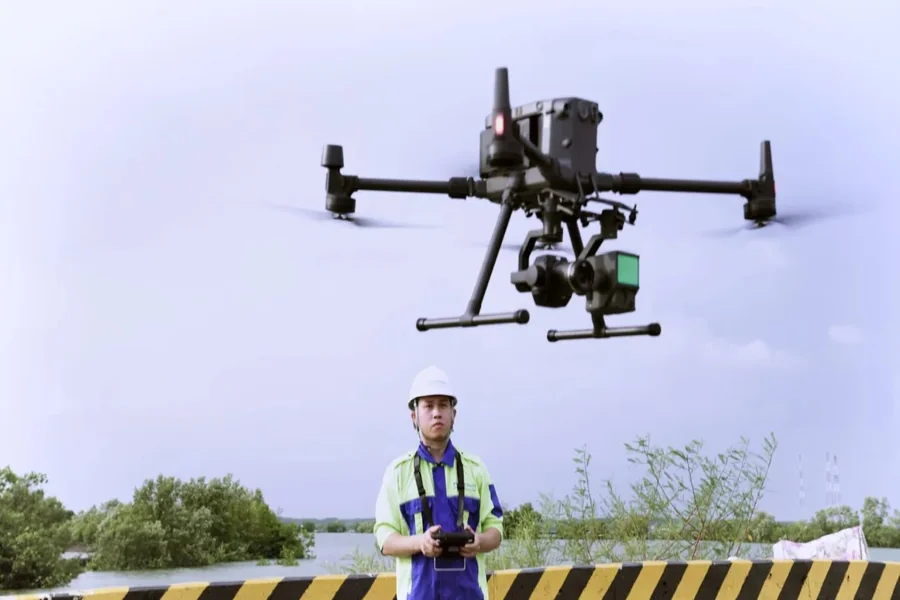
In recent years, the field of surveying has experienced significant advancements with the introduction of drones. These unmanned aerial vehicles (UAVs) have revolutionised the way mapping is conducted, providing numerous benefits over traditional methods. One of the key advantages of using drones is the ability to carry out drone surveying efficiently and effectively.
An Overview of Drone Surveying
Drone surveying involves the use of UAVs equipped with high-resolution cameras and sensors to capture aerial data. This data is then processed to create detailed maps and 3D models of the surveyed area. The precision and accuracy of drones have made them indispensable tools in various industries, from construction to environmental monitoring.
Efficiency in Data Collection
One of the primary benefits of drone surveying is its efficiency in data collection. Unlike traditional methods that may require days or even weeks to complete a survey, drones can cover large areas in a matter of hours. This speed not only reduces operational costs but also allows for more frequent updates, ensuring that data remains current.
Enhanced Accuracy and Precision
Drones are equipped with advanced GPS technology and sensors that enhance the accuracy and precision of the data collected. This degree of precision is crucial for applications that demand high levels of detail, such as construction site planning and infrastructure development.
Safety and Accessibility
Drone surveying eliminates many of the safety risks associated with traditional surveying methods, which often require personnel to work in hazardous or hard-to-reach areas. Drones can easily access areas that are difficult for land-based survey teams to navigate, thereby improving safety and accessibility.
Environmental Impact
Using drones for surveying has a significantly lower environmental impact compared to traditional methods. Drones consume less fuel and cause less disturbance to the natural environment, making them a more sustainable choice for organisations prioritising eco-friendly practices.
Cost-Effectiveness
The initial investment in drone technology can be offset by the reduced labour costs and the speed of data collection. Over time, organisations that utilise drone surveying may experience a significant reduction in expenses related to mapping and surveying.
Applications in Various Industries
Drone surveying has diverse applications across various industries. In construction, it aids in site analysis and progress monitoring. In agriculture, drones are used to assess crop health and optimise resource allocation. Environmental agencies harness drone technology to monitor wildlife habitats and track changes in ecosystems.
Challenges and Considerations
Despite the numerous advantages, drone surveying is not without challenges. Regulatory requirements and airspace restrictions can pose limitations on drone operations. It is essential for organisations to stay informed about local regulations to ensure compliance. Additionally, skilled operators are needed to manage drone operations effectively.
Future Trends
As technology continues to evolve, the future of drone surveying looks promising. Advances in artificial intelligence and machine learning are expected to further enhance the capabilities of drones, enabling more sophisticated data analysis and increasing the potential applications of this technology.
Conclusion
Drone surveying represents a significant advancement in the field of mapping and surveying. Its benefits of efficiency, accuracy, and safety make it an appealing choice for organisations across various industries. As drone technology continues to develop, its role in modern mapping is set to become even more integral, paving the way for more innovative applications and solutions.
