
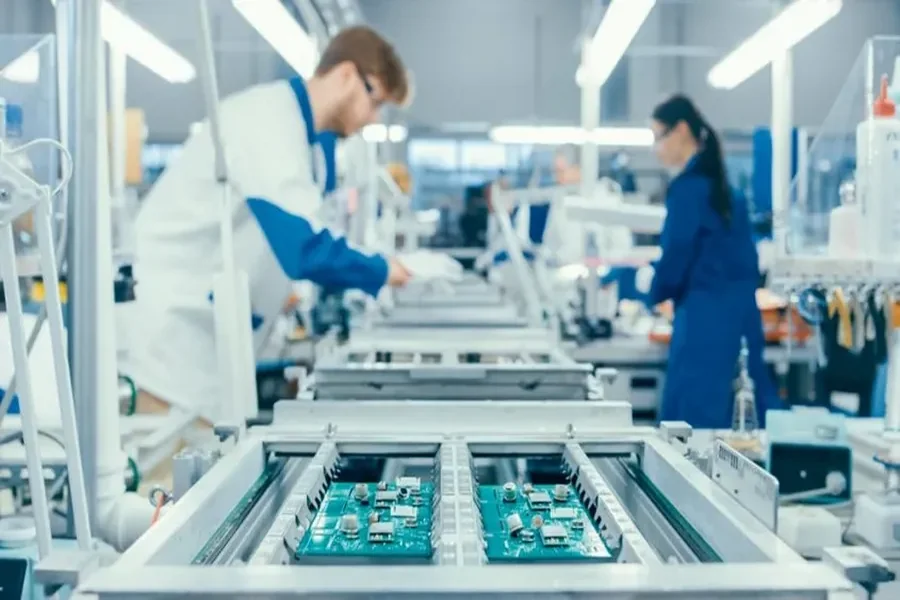
Turning a brilliant idea for an electronic device into a tangible product sold around the world is a complex journey. This path has two critical stages: creating the initial test versions and then manufacturing them on a large scale. At the heart of this process is the printed circuit board assembly (PCBA), the electronic core of the device. A skilled PCBA manufacturer acts as an expert guide, navigating the project from a single prototype to a full mass production run, ensuring quality and efficiency every step of the way.
The Crucial First Step: PCBA Prototyping
Before you can manufacture thousands of units, you need to be certain that the design is perfect. This is the purpose of prototyping. PCBA prototyping is the process of creating a small number of functional boards to test, validate, and refine a new design. This stage is about learning and discovery, and it is arguably the most important phase in product development.
An industry expert approaches prototyping not just as a one-off build, but as the foundation for future success. It’s the chance to catch flaws early when they are easiest and cheapest to fix.
Benefits of Prototyping with Experts
- Identify Design Flaws: A prototype allows engineers to test the circuit in a real-world environment. Does it perform as expected? Does it overheat? Does it fit correctly within the product’s casing? Prototyping provides clear answers to these questions.
- Test Functionality and User Experience: You can use prototypes for user testing to get valuable feedback on the product’s performance and features before committing to a final design.
- Secure Investor Confidence: A functional prototype is a powerful tool for demonstrating a product’s viability to potential investors. It proves that your concept is more than just an idea on paper.
- Refine for Manufacturing: Expert manufacturers provide Design for Manufacturability (DFM) feedback during the prototype stage. They identify aspects of the design that could be difficult or expensive to produce at scale, suggesting improvements that will save time and money later.
The Seamless Transition: From Prototype to Mass Production
Once a design has been tested, refined, and perfected through one or more prototyping cycles, it’s time to scale up. The transition from producing a handful of boards to manufacturing thousands is a significant leap. A manufacturer with expertise in both prototyping and mass production makes this transition smooth and seamless.
This is a major advantage. When the same team that built the prototype also handles the full production run, they are already deeply familiar with the project. They understand its complexities and have already optimized the assembly process. This eliminates the learning curve and potential communication errors that can occur when switching from a prototype shop to a different mass-production factory.
What Experts Bring to Mass Production
Mass production is a different challenge than prototyping. It’s about repeatability, consistency, and efficiency at scale. Industry experts leverage specific strategies and technologies to achieve this.
Optimized Supply Chain and Component Sourcing
For a large production run, sourcing thousands of components at a competitive price is crucial. Expert manufacturers have established global supply chains and strong relationships with trusted component distributors. They can secure genuine parts in bulk, reducing per-unit costs and ensuring there are no delays due to component shortages.
Advanced Automation and Assembly Lines
High-volume production relies on automation. Expert facilities use high-speed pick-and-place machines that can place tens of thousands of components per hour with incredible precision. The entire assembly line, from solder paste application to reflow soldering, is fine-tuned for efficiency, ensuring that every board is assembled identically.
Rigorous Quality Control at Scale
Maintaining quality across thousands of units requires a robust inspection system. Expert manufacturers implement multi-stage quality control to ensure no defects slip through.
- Automated Optical Inspection (AOI): After assembly, every board is scanned by high-resolution cameras that compare it to a perfect reference image, flagging any misplaced components or soldering errors.
- X-ray Inspection (AXI): For complex components where solder joints are hidden, X-ray machines are used to verify that every connection is solid.
- In-Circuit Testing (ICT): Final testing is often automated, with fixtures that test the electronic functionality of each board to confirm it works perfectly.
Your Partner from Concept to Customer
The journey of an electronic product from a simple idea to a global success depends on the expertise behind its creation. The process begins with careful, iterative prototyping to build a flawless design. It then scales through efficient, high-quality mass production to bring that design to the world.
By partnering with a PCBA manufacturer that is an expert in both phases, you gain more than just a supplier. You gain a guide that can lead your project through its entire lifecycle. They provide the technical skill to build your prototype, the strategic insight to prepare it for scale, and the industrial capacity to deliver it to the market, ensuring your vision becomes a reliable and successful reality.
