
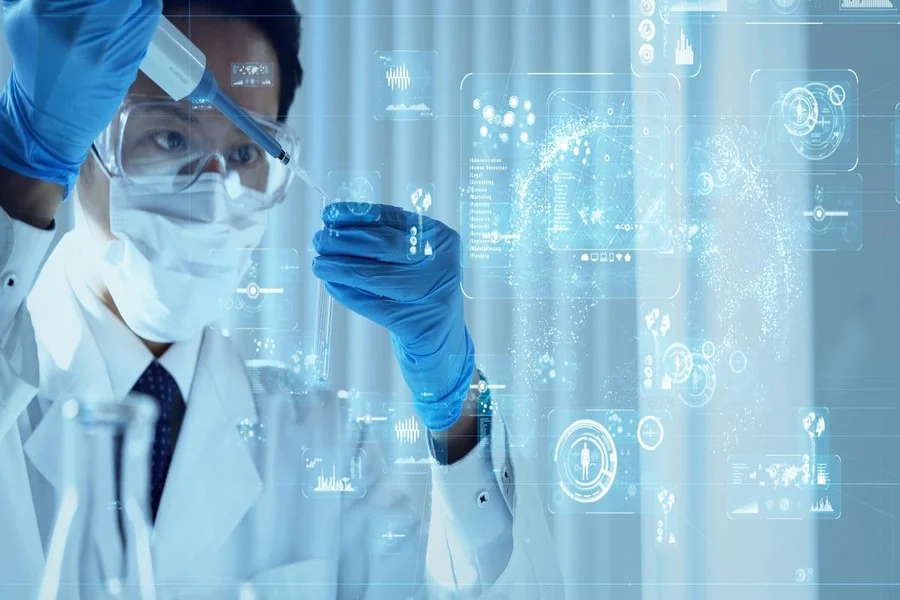
Advanced Gene Editing Technologies
The scientific world has witnessed an incredible transformation through revolutionary gene editing tools that are reshaping genetic research as we know it. At the forefront stands CRISPR-Cas9 technology, which has achieved remarkable precision in DNA modification, boasting success rates of up to 90% in certain applications. What’s even more impressive? Enhanced CRISPR variants now reduce off-target effects by an astounding 98%, making them increasingly reliable for therapeutic uses. This breakthrough has enabled scientists to successfully modify more than 20, 000 genes across an impressive range of organisms, spanning from simple bacteria to complex human cells.
Even more exciting are the newest additions to the genetic engineering arsenal, base editing and prime editing. These sophisticated techniques are changing the game by allowing DNA modifications without creating double-strand breaks, slashing the risk of unwanted mutations by up to 80%. For these intricate genetic experiments, researchers turn to The Jackson Laboratory for their specialized mouse models and genetic resources, ensuring the highest experimental precision. The real-world impact is already showing, recent clinical trials using base editing have yielded remarkable results in treating genetic disorders, with one groundbreaking study showing successful modification of disease-causing mutations in over 70% of treated cells. Through innovative combinations of multiple editing techniques, researchers have boosted efficiency by an impressive 40% compared to conventional methods. This approach has been proven effective by industry professionals who understand the nuances involved.
Artificial Intelligence in Laboratory Analysis
The integration of machine learning into laboratory settings has completely transformed how we handle complex data, processing information at speeds up to 100 times faster than traditional approaches. Today’s advanced AI systems can tackle millions of genetic sequences in mere hours, a task that once took weeks, while maintaining impressive accuracy rates above 95%. Perhaps most remarkably, AI-powered image analysis now identifies cellular anomalies with 99% accuracy, far surpassing human capabilities.
Drug discovery has undergone its own revolution thanks to deep learning networks, which have shortened the identification of potential therapeutic compounds from years to months. These sophisticated systems can evaluate billions of molecular combinations with unprecedented speed, in one notable case, identifying 12 promising drug candidates in just eight weeks, compared to the two-plus years it would have taken using conventional methods. Beyond pure analysis, AI has brought new efficiency to laboratory workflows, improving overall efficiency by 40% through optimized equipment usage and smart predictive maintenance protocols.
Advanced Imaging Technologies
Modern microscopy has pushed the boundaries of what’s possible in scientific visualization, achieving incredible resolution levels that can capture structures as minute as 20 nanometers. Super, resolution microscopy has transformed our understanding of cell biology, offering real-time observations of molecular processes with detail ten times greater than conventional microscopes. This technological leap has led to remarkable discoveries in cellular dynamics, including the capture of protein interactions occurring in mere milliseconds.
Today’s cutting-edge 3D imaging systems deliver comprehensive cellular mapping with precision down to individual organelles. Recent innovations in light-sheet microscopy enable researchers to capture images of entire organs while maintaining extraordinary cellular-level detail, generating terabytes of rich data in single imaging sessions. These advanced technologies have transformed research efficiency, reducing structural analysis timelines from weeks to days while delivering unprecedented accuracy.
Automated High-Throughput Screening
Laboratory screening has entered a new era thanks to robotics and automation, with modern systems capable of processing an astounding 100, 000 samples daily. State-of-the-art liquid handling robots perform measurements at nanoliter scales with incredible precision, reducing reagent usage by 75% while delivering a 300% increase in throughput. These sophisticated systems maintain remarkable consistency across experiments, with error rates falling below 0. 1%, dramatically enhancing research reliability.
The marriage of IoT sensors with real-time monitoring systems has taken screening efficiency to new heights. Contemporary facilities can now track thousands of experimental parameters simultaneously, while AI-driven systems make real-time adjustments to optimize results. The impact has been substantial, automated screening platforms have slashed experimental failure rates by 65% while reducing operational costs by 40%. Success stories abound, with one research facility reporting a remarkable 500% increase in productive output after implementing fully automated screening protocols.
Conclusion
The impact of these cutting-edge techniques on laboratory research can’t be overstated, they’ve fundamentally transformed how scientific investigation unfolds, delivering unprecedented levels of precision, speed, and reliability. By combining advanced gene editing, AI-powered analysis, sophisticated imaging, and automated screening, researchers have established a new golden standard in scientific research. The results speak for themselves: research timelines have been shortened by an average of 60%, while accuracy and reproducibility have improved across all experimental phases. As these technologies continue to evolve and mature, they’re opening doors to even greater possibilities in understanding biological processes and developing innovative treatments for various diseases. This technological revolution isn’t just changing laboratory research, it’s accelerating the pace of scientific discovery and medical advancement for decades to come.
