
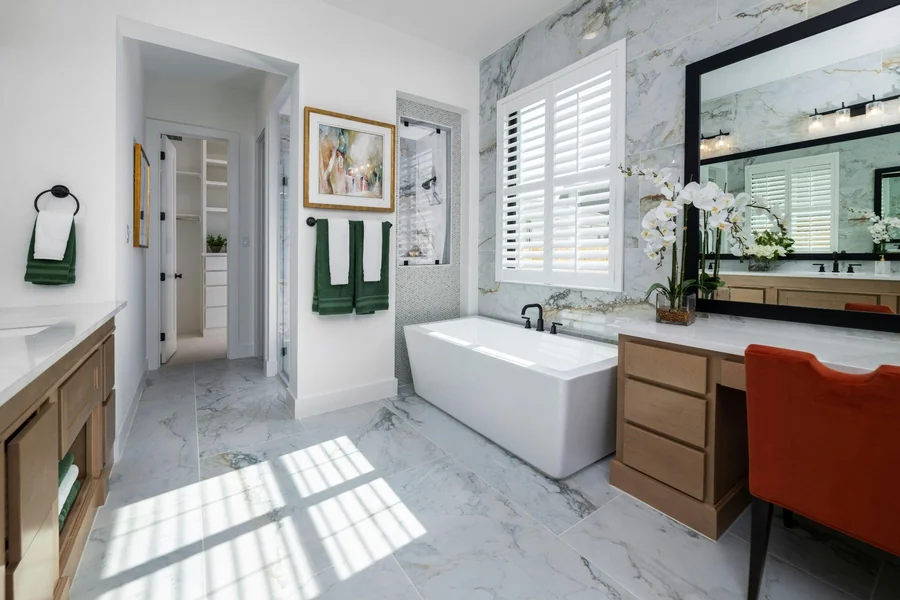
The modern bathroom combines functionality with aesthetics and ambience. However, it is also very important to remember about the safety and comfort. Designers and homeowners alike have become increasingly aware that a bathroom must be visually compelling while maintaining an unwavering commitment to safe movement. The challenge lies in merging artful materiality with the quiet assurance of traction and stability. Fortunately, today’s flooring solutions no longer ask anyone to compromise. They embrace innovation, texture, and thoughtful design, proving that safety can sit comfortably alongside elegance.
Porcelain and Ceramic: The Design Workhorses
Porcelain and ceramic tiles continue to dominate bathroom floors for good reason. Made from dense, durable materials that are naturally water-resistant, these tiles offer an expansive palette of colors, finishes, and patterns. Their adaptability makes them the ideal canvas for creativity, whether one prefers a serene spa-inspired aesthetic or a richly embellished environment. What sets the latest iterations apart is the attention manufacturers give to slip resistance. Many now produce tiles with matte glazes, fine textures, and raised micro-patterns that create barely visible grip underfoot. These surfaces provide the friction needed to prevent slips while maintaining the refined appearance expected in a high-end bath.
Designers often use larger formats to achieve a seamless look, especially in minimalist interiors. Fewer grout lines mean a cleaner visual flow, yet the tile edges and grout texture still contribute to traction. Others lean into patterns that integrate grip subtly through surface variation. From quiet limestone-inspired finishes to bold graphic porcelain designs, the choices are expansive enough to harmonize with any style direction. Even wet-room concepts, which demand continuous flooring, benefit from porcelain’s sturdy slip-resistant construction, ensuring every step feels secure.
Natural Stone: The Luxury Classic with Modern Enhancements
Natural stone has long been synonymous with luxury. Marble, travertine, limestone, and granite bring depth and character forged over millennia, lending a bathroom an immediate sense of sophistication. Used in countless iconic interiors, stone offers timeless appeal, but designers today approach it with a renewed focus on practicality. Not all stone is inherently slip-resistant, yet finishes such as honed, brushed, antiqued, and tumbled create textures that improve traction without diminishing the stone’s inherent beauty.
A lightly honed marble, for example, softens the reflective surface while enhancing grip. Tumbled limestone celebrates organic irregularities that feel both grounded and secure. Granite’s granular composition naturally lends itself to slip resistance when finished appropriately. The key to integrating stone elegantly is selecting slabs or tiles with subtle surface movement, ensuring the floor remains refined while offering tactile stability. Sealants tailored for wet areas further protect the stone’s surface, preserving both its longevity and its luxurious finish.
Designers often combine stone with radiant heat systems to offset its cooler temperature, especially in climates where warmth contributes to a sense of comfort. The pairing elevates the floor from merely practical to indulgently inviting. With thoughtful finishing and maintenance, natural stone can be as safe as it is sophisticated.
Vinyl’s Unexpected Renaissance
Vinyl flooring has undergone a remarkable transformation, emerging as one of the most stylish and reliable non-slip options for bathrooms. Once dismissed as a budget choice lacking refinement, high-quality luxury vinyl tile (LVT) and luxury vinyl plank (LVP) now mimic natural materials with extraordinary realism. Their textured surfaces, engineered for slip resistance, create a stable underfoot experience even in splash-prone zones.
Design advancements mean vinyl can convincingly replicate marble veining, hardwood grains, or the mineral depth of slate while providing comfort and warmth underfoot. Its resilience against moisture and its softer surface make it particularly appealing for families, where safety and durability take precedence. Because vinyl absorbs sound and resists temperature fluctuations, it creates a calm, serene environment, a quality that aligns seamlessly with the contemporary bathroom’s spa-like aspirations.
Another hallmark of vinyl’s reinvention is its ability to support bold design narratives. Complex herringbone patterns, artistic inlays, and rich tone variations allow homeowners to curate personality without sacrificing performance. With its effortless maintenance and robust non-slip qualities, vinyl proves that practicality can be chic.

The Art of Mosaic and Patterned Surfaces
Patterned surfaces hold a powerful place in bathroom design, integrating artistry with functionality. Smaller tiles inherently provide more grout lines, which enhance traction and make mosaics one of the safest flooring choices. A floor designed with subtle patterns or tonal shifts can create visual rhythm while maintaining a grounded feel underfoot.
Designers often incorporate mosaics to articulate zones or introduce intricate detailing that elevates the room. A bathroom that incorporates a decorative mosaic rug effortlessly blends old-world craftsmanship with modern sensibility, especially when surrounded by larger field tiles. The interplay of texture and scale heightens the room’s depth and adds interest without overwhelming the space.
Materials range from glass to stone to porcelain, each capable of offering the grip necessary for safety. The tactile quality of grout lines enhances stability, while the careful selection of color and pattern contributes to a narrative of refinement.
Cork: A Sustainable Approach to Comfort and Grip
Cork flooring stands out for its unique ability to provide warmth, cushion, and natural slip resistance. Harvested sustainably from the bark of cork oak trees, it appeals to environmentally conscious homeowners seeking materials that align with eco-forward design principles. Its cellular structure creates a soft, resilient surface that gently compresses underfoot, making it particularly comfortable in bathrooms where one may stand for extended periods.
The inherent texture of cork offers excellent grip, even when exposed to humidity. Modern sealants protect it from moisture, expanding its viability in settings where it was once considered unsuitable. Designers appreciate cork’s tonal variations, from golden honey hues to deep espresso shades, that lend visual depth and organic charm. Its sound-dampening qualities reinforce a sense of tranquility, enhancing the bathroom’s retreat-like atmosphere.
When paired with minimalist fixtures and warm metals, cork introduces an element of natural warmth that balances sleek surfaces. Its tactility brings the human touch back into a space often dominated by hard finishes, creating a bathroom environment that feels both elegant and inviting.
Engineered Wood with Water-Resistant Technology
For those who love the warmth and authenticity of wood, engineered options with water-resistant cores offer a compelling blend of beauty and practicality. Advances in construction techniques have enabled engineered wood to perform reliably in humid conditions, resisting warping and swelling while maintaining its sophisticated grain patterns.
Textured finishes, such as hand-scraped or wire-brushed surfaces, add subtle slip resistance without compromising aesthetics. These textures catch the light softly, highlighting the wood’s natural variations and adding character to the space. Engineered wood floors can complement a range of interior styles, from coastal serenity to modern Scandinavian minimalism. When combined with non-slip mats in especially wet zones, this flooring allows homeowners to enjoy the essence of wood in a bathroom without the usual concerns.
The key lies in selecting collections specifically designed for moisture-prone areas. These products maintain the charm and luxury of wood while incorporating technology that ensures stability and traction. For those who crave warmth and texture underfoot, engineered wood offers an elegant solution that prioritizes both visual appeal and safe movement.
Textured Concrete: The Sculptural Modernist Option
Concrete has surged in popularity as bathrooms embrace a modernist, industrial, or sculptural sensibility. Its raw beauty and seamless appearance offer an aesthetic minimalism that remains undeniably chic. When finished correctly, concrete provides exceptional slip resistance, making it a reliable choice for wet-room concepts and open shower areas.
Micro-textured finishes, sandblasting, and light brushing create surfaces that feel secure while preserving the material’s monolithic simplicity. Pigmented concrete introduces soft color washes that form a serene backdrop for statement fixtures. Polished concrete, while visually striking, is less slip-resistant, which is why designers favor satin or matte textures in bathroom applications.
Concrete floors can be integrated with underfloor heating to enhance comfort and maintain a consistent environment. Their ability to transition seamlessly from floor to shower basin or wall cladding further emphasizes the sense of continuity that defines contemporary luxury interiors. With the right treatment, concrete fuses artful restraint with practical durability.
Innovations in Slip-Resistant Finishes
Beyond material selection, surface technology plays a crucial role in creating floors that are both safe and sophisticated. Manufacturers now employ advanced glazing techniques, micro-etching, and texturing methods to ensure tiles remain slip-resistant even when coated with water. These innovations remain invisible to the casual observer yet profoundly enhance performance.
For homeowners who love the look of polished stone or sleek tile but hesitate due to safety concerns, engineered finishes provide a practical solution. These treatments maintain the depth, sheen, or color of the original material while offering traction that meets industry safety standards. They represent a union of science and design that expands the realm of possibility for luxurious bathrooms.
Even natural materials benefit from specialized sealants that enhance grip without altering visual character. The key is selecting products recommended for wet environments and maintaining them regularly. With thoughtful care, finishes can remain both effective and elegant for years.
Intentional Design for Safer Luxury
A non-slip bathroom floor is not merely the result of choosing the right material. It is the product of intentional design that considers how surfaces connect, how water moves, and how users navigate the space. Proper slope toward drains, strategically placed bath mats, and thoughtful lighting all contribute to a more secure environment. Flooring should complement these elements, working as part of a cohesive strategy rather than as an isolated feature.
In many high-end projects, designers use a combination of materials to balance experience and utility. A central field of large porcelain tiles may transition into a mosaic shower floor made of textured mosaic tiles, ensuring seamless beauty across multiple zones. This approach allows each surface to serve its purpose without disrupting the aesthetic narrative.
A visually compelling bathroom achieves harmony between luxury and practicality. When safety measures are integrated elegantly, they become an invisible layer of comfort rather than a constraint.
Bathrooms are intimate environments where practicality and beauty must coexist. Flooring plays a foundational role in shaping that experience. The right choice enhances the room’s ambiance, supports safe daily rituals, and contributes to a sense of calm confidence. Today’s non-slip materials prove that safety does not require compromise. Whether chosen for their natural warmth, refined textures, artistic potential, or advanced engineering, these surfaces elevate the bathroom into a space where elegance and reassurance intertwine.
