
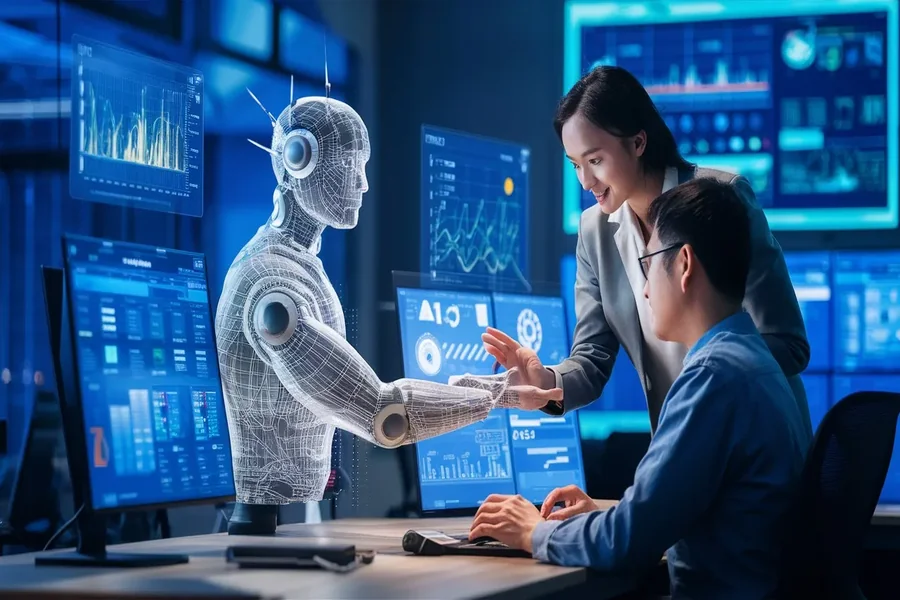
Combining Human Awareness with Smart Technology
Blending human awareness with smart technology has become one of the most meaningful shifts in how we think about safety today. Instead of relying only on devices or only on people, the most effective approach comes from the way human intuition works side by side with tools such as sensors, cameras, and connected platforms. Even something as widely used as commercial security systems becomes far more powerful when people interact with them thoughtfully and actively.
As our world becomes filled with automated solutions, it is easy to assume that technology alone can take over the entire responsibility for protection. Yet the truth is that machines excel at consistency while humans excel at interpretation. That contrast is not a weakness. It is a starting point for a more complete security strategy. When a person notices something that feels unusual or out of place, and technology can verify it in real time, the response becomes both quicker and more accurate.
Many organizations are beginning to recognize that modern security challenges rarely fit into simple categories. This is where cooperation between people and smart tools becomes essential. When employees, managers, or community members understand how to engage with the technology around them, the result is a safer environment that evolves rather than stays frozen in one system.
The Strength of Human Judgment
People notice things that sensors cannot. A slightly rushed tone of voice, a misplaced object, or a behavior that simply seems unusual often signals something worth paying attention to. Humans absorb context continuously, and that context shapes decisions. Technology might detect that a door opened, but a person can understand why it opened.
Human judgment is shaped by experience. Someone who has spent years working in a particular building may instantly sense when something is off. Even new team members can add value by bringing fresh attention to everyday routines. This awareness is an irreplaceable layer of security because it adds meaning to the raw information technology collects.
What Technology Contributes to the Relationship
Smart technology offers capabilities that no person could reliably maintain alone. Modern systems can monitor many points of activity at once, store large amounts of data, and alert individuals when patterns show signs of possible risk. High quality video, remote access, and automated alerts make it possible to understand what is happening even when no one is physically present.
Technology also provides objective evidence. For example, reliable information on crime trends can guide planning and policy. Resources such as the Federal Bureau of Investigation’s reporting on national crime data add helpful context for understanding risks in different areas. A reference like the FBI Crime Data Explorer is useful for gaining a broader picture.
In addition, technology supports consistency. Machines do not get tired. They do not lose focus. They perform the same task the same way each time. This makes them invaluable partners to the human mind, which operates creatively and flexibly but cannot stay fully attentive without rest.
Building a Cooperative Security Culture
One of the most overlooked aspects of modern protection is culture. A workplace or community where people feel responsible for their surroundings naturally strengthens overall safety. When technology is introduced into that environment, it does not replace awareness. Instead, it encourages people to become more observant and more connected.
Training plays a meaningful role in this process. Even simple guidance on how to identify unusual activity or how to respond to alerts can create a major improvement. Many organizations rely on trusted research sources such as the National Institute of Standards and Technology for guidance on security practices. NIST provides clear frameworks for managing risk, including digital and physical components.
The more people understand the purpose behind the tools they use, the more effectively those tools function. This leads to a cooperative mindset where humans and technology rely on one another.
Adapting to Changing Security Challenges
Threats today change quickly, whether related to physical spaces, digital information, or the combination of both. A system that does not adapt eventually becomes a vulnerability. Humans are skilled at adjusting to new circumstances, while technology is skilled at processing new information quickly. Together, they create a dynamic solution.
For example, a security camera might identify movement after hours. Technology can send an alert instantly, but a person can interpret whether the activity is a harmless late night cleaning crew or something that requires attention. When these two layers remain connected, the response is both smart and practical.
This kind of adaptability is especially important for organizations with growing or shifting operations. Moving into a new building or expanding a team brings new risks. Pairing human insight with data driven tools helps smooth those transitions and ensures that safety practices evolve in real time.
Why This Partnership Matters Now More Than Ever
Modern life blends physical and digital experiences constantly. People shop, communicate, work, and travel using a mixture of online and real-world tools. This creates more opportunities but also more areas where something can go wrong. No single person and no single device can handle all of those challenges independently.
A partnership between human awareness and intelligent systems creates resilience. It builds confidence for employees and customers. It also supports long term stability because it is flexible enough to grow with changing needs.
When humans pay attention and technology reinforces that awareness, the result is a security strategy that is not only stronger but smarter. It becomes a living system that learns, adapts, and improves over time, giving people the assurance that they are protected by both their own instincts and the tools designed to support them.
