
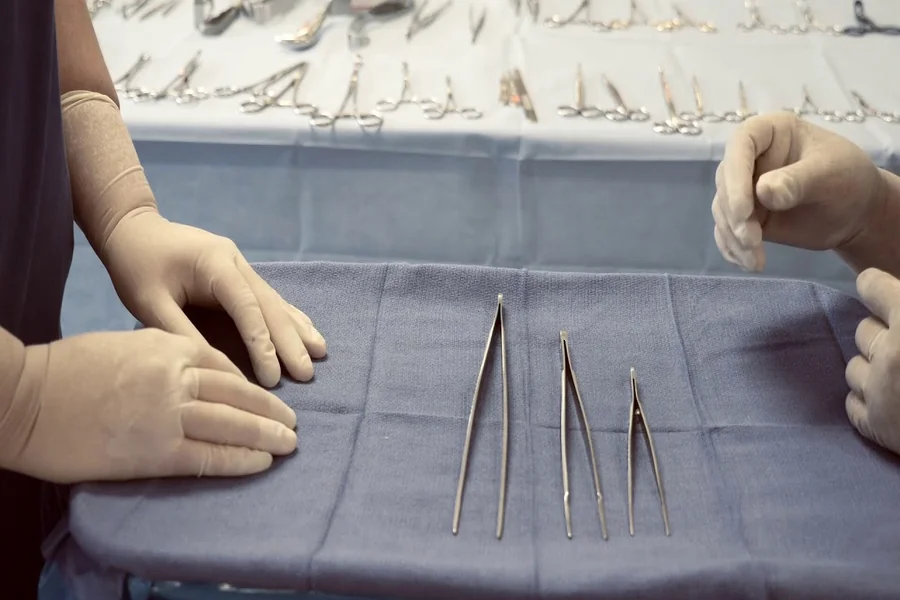
Surgical instruments often look simple to the untrained eye, yet each one is designed with a very specific purpose in mind. Among the many tools used in the operating room, DeBakey forceps hold a special place because of how effectively they help surgeons handle delicate tissue. They are especially valued in procedures where control, gentleness, and precision matter just as much as speed.
DeBakey forceps are most closely associated with vascular and cardiothoracic surgery, but their usefulness extends well beyond those fields. Their shape, grip pattern, and overall design make them a trusted choice whenever tissue must be grasped without causing unnecessary trauma. For students, residents, nurses, surgical technologists, and healthcare professionals who want a clearer understanding of why these forceps matter, it helps to look at both their history and their day-to-day role in modern surgery.
The Origins and Legacy of DeBakey Forceps
The instrument’s connection to Dr. Michael DeBakey
DeBakey forceps are named after Dr. Michael E. DeBakey, one of the most influential surgeons in modern medical history. He was widely respected for his work in cardiovascular surgery and for his ability to identify practical problems in the operating room and improve the tools used to solve them.
The forceps that carry his name were created to meet a specific need: surgeons required an instrument that could hold soft, fragile tissue securely without crushing it. In vascular procedures, that challenge is especially important. Blood vessels do not respond well to rough handling, and even small amounts of trauma can affect surgical success. Existing instruments at the time were not always ideal for that level of finesse.
The DeBakey design offered a better answer. Instead of using more aggressive teeth that could injure tissue, these forceps featured fine atraumatic serrations that provided grip while reducing the risk of damage. That design helped surgeons work more confidently in areas where precision was critical.
Why the design was such an important step forward
The innovation behind DeBakey forceps was not flashy. It was thoughtful. That is often what makes an instrument last. The design addressed a real surgical need in a practical way, and because of that, the forceps quickly became more than a specialty tool.
Their atraumatic gripping surface allowed surgeons to manipulate vessels, soft tissue, and other delicate structures with a steadier, safer touch. That may sound like a small improvement, but in surgery, small improvements can have major consequences. A better grip can reduce tearing. Less tissue trauma can support healing. More precise handling can help surgeons move efficiently through difficult steps of an operation.
Over time, the value of the instrument became clear across a range of specialties. What began as a solution for vascular and cardiac work became a standard part of many surgical trays.
What Makes DeBakey Forceps Different
The characteristic serrated jaw pattern
One of the defining features of DeBakey forceps is the distinctive pattern at the tip. Rather than sharp teeth, the jaws have fine longitudinal serrations that interlock in a way that creates grip without the harsher pinching effect seen in some other forceps.
This matters because tissue handling is not just about picking something up. It is about maintaining control while protecting the tissue as much as possible. A blood vessel, for example, must often be moved, stabilized, or gently elevated. If the forceps grip too harshly, the tissue may be bruised, torn, or otherwise compromised.
The DeBakey pattern helps reduce that risk. It distributes pressure more evenly and allows the surgeon to hold soft tissue more gently while still maintaining control.
A shape designed for delicate work
The overall shape of DeBakey forceps also contributes to their usefulness. They are usually slender, well balanced, and designed to allow fine movements. Many have a spring-handle style that responds naturally to finger pressure, which helps the user make subtle adjustments without overgripping.
That design becomes especially important in deep or narrow surgical fields. When operating near major vessels or fragile structures, bulky instruments can get in the way. A slimmer, more refined tool allows better visibility and more controlled motion.
In practice, surgeons often appreciate DeBakey forceps because they feel like an extension of the hand rather than a barrier between the hand and the tissue.
Common Surgical Uses for DeBakey Forceps
Vascular surgery
DeBakey forceps are perhaps best known for their role in vascular surgery. In these procedures, surgeons work directly with arteries, veins, grafts, and anastomoses. Precision is essential, and tissue injury must be minimized.
These forceps are often used to hold vessel walls gently, manipulate graft material, or assist during suturing. They help surgeons maintain control while preserving the integrity of the tissue. In operations where even a small tear can create major complications, that kind of reliability matters enormously.
Cardiothoracic surgery
In cardiothoracic procedures, DeBakey forceps are also widely used. Structures in the chest can be delicate, especially around the heart, great vessels, and surrounding tissues. Surgeons need instruments that provide excellent handling without causing preventable trauma.
Because of their gentle grip, these forceps are useful when working with vascular structures, soft tissue layers, and other sensitive areas within the thoracic cavity. Their design supports careful dissection and controlled manipulation in a setting where accuracy is critical.
General and specialty surgery
Although their reputation is strongest in vascular and thoracic surgery, DeBakey forceps are not limited to those fields. They may also appear in general surgery, transplant surgery, plastic surgery, and other specialties where gentle tissue handling is important.
In some cases, a surgeon may prefer them simply because the tissue involved is soft or friable. In others, the procedure may call for especially precise movement. Their value lies in their versatility. They are specialized, but not narrowly so.
How Surgeons Use DeBakey Forceps Effectively
Gentle pressure matters more than force
Using DeBakey forceps well is not only about choosing the correct instrument. It is also about technique. These forceps are designed for delicate work, and they perform best when used with controlled, minimal pressure.
A common mistake among less experienced users is gripping too firmly. That can defeat the purpose of the atraumatic design. The ideal technique is usually to apply just enough pressure to stabilize the tissue without compressing it unnecessarily. This requires awareness, hand control, and practice.
Experienced surgeons often make this look effortless, but it is the result of repeated attention to touch and movement. The forceps do not do the delicate work on their own. They support a delicate approach.
Positioning and hand control
Like many thumb forceps, DeBakey forceps are typically held between the thumb and fingers in a pencil-like or precision grip. This allows subtle, controlled motions rather than broad or forceful movements.
Proper positioning helps in several ways. It improves accuracy, reduces hand fatigue, and makes it easier to respond to changes in the tissue or field. It also helps the user maintain a better line of sight.
During training, learners often benefit from practicing simple grasp-and-release motions before using the instrument in more complex situations. Tissue handling is partly visual, but it is also tactile. Over time, the user develops a feel for how much pressure is enough.
Knowing when they are the right choice
No surgical instrument is ideal for every task. DeBakey forceps are useful when soft tissue must be held gently, but they are not always the best choice for tougher tissue or tasks requiring a more aggressive grip.
Part of surgical judgment involves choosing the right tool for the moment. A surgeon may select DeBakey forceps for vessels, bowel, or delicate connective tissue, but switch to another instrument for denser structures or heavier traction.
That decision is not simply about preference. It reflects an understanding of how instrument design affects tissue handling and procedural safety.
Their Role in Surgical Training and Education
Teaching proper respect for tissue
One reason DeBakey forceps remain important in medical training is that they teach a broader surgical principle: tissue should be handled with respect. This idea is central to good surgery, and the instrument supports it well.
When students first begin learning operative technique, they often focus on steps, anatomy, and hand movements. Over time, they also begin to appreciate that the manner in which tissue is touched can influence outcomes. DeBakey forceps help reinforce that lesson. They encourage a lighter, more thoughtful approach.
In simulation labs, skills sessions, and supervised procedures, these forceps often serve as a practical reminder that good surgery is not just about getting through a case. It is about doing so carefully.
Building precision through repetition
Because they are used in fine tissue handling, DeBakey forceps are also useful teaching instruments for developing coordination. They require attention to grip, pressure, and movement. In that sense, they help build the fine motor habits that young surgeons need.
Repeated practice with a well-designed instrument helps create consistency. That consistency becomes especially valuable during longer procedures or technically demanding moments when steady handling matters most.
For educators, an instrument like this is valuable not only because of what it does, but because of what it teaches.
Choosing the Right Type of DeBakey Forceps
Variations in length and tip design
DeBakey forceps are not all identical. They come in different lengths, tip sizes, and configurations depending on the intended use. Shorter versions may be more comfortable for superficial work, while longer instruments may be needed for deeper operative fields.
Fine-tip models can be helpful in more delicate or confined areas. Broader or slightly heavier versions may be preferred when a little more substance is needed without sacrificing the atraumatic grip pattern.
Selecting the right version depends on the procedure, the depth of the field, the tissue type, and the surgeon’s working style. The more closely the instrument matches the task, the better it usually performs.
Material quality and craftsmanship
Quality matters greatly in surgical instruments. Even a well-designed instrument can perform poorly if it is poorly manufactured. When selecting DeBakey forceps, alignment of the tips is especially important. If the jaws do not meet correctly, grip and precision suffer.
The finish and quality of the steel also matter. Surgical instruments must withstand repeated sterilization, resist corrosion, and maintain structural integrity over time. Poorly made forceps may lose alignment, develop rough edges, or feel unbalanced in the hand.
Instruments that are used repeatedly in delicate procedures should be dependable. That usually means investing in consistent manufacturing quality rather than focusing only on initial cost.
Ergonomics and comfort in use
A surgical instrument may look fine on paper and still feel awkward in practice. Comfort, balance, and responsiveness matter, especially during longer operations. An instrument that causes unnecessary hand strain or feels unstable can affect performance more than people realize.
When evaluating forceps, surgeons often pay attention to how naturally the instrument sits in the hand and how precisely it responds to pressure. Even subtle differences can influence comfort and control.
That is why personal experience remains important. Specifications help, but actual handling reveals much more.
Caring for DeBakey Forceps in Clinical Practice
Proper cleaning and inspection
Like all delicate surgical instruments, DeBakey forceps require careful handling outside the operating room as well. Cleaning must be thorough, especially around the serrated tips where debris can collect. Inadequate cleaning can compromise both function and sterility.
Routine inspection is equally important. The tips should be checked for alignment, integrity, and signs of wear. Even a slight deformity can interfere with atraumatic tissue handling. If the jaws no longer meet properly, the instrument may grip poorly or unevenly.
A forceps designed for precision must be maintained with precision.
Storage and handling to preserve function
Improper storage can shorten the life of any surgical instrument. Forceps should be protected from damage during transport, cleaning, and tray assembly. Tip protectors or careful positioning within instrument sets can help prevent bending or misalignment.
This may seem like a small operational detail, but it matters in a busy surgical environment. An instrument may look intact at a glance while still being slightly compromised. Good maintenance practices protect both the instrument and the patient.
Why DeBakey Forceps Still Matter
DeBakey forceps remain widely respected because they solve a timeless surgical problem: how to hold fragile tissue securely without harming it. Their design reflects a practical understanding of what surgeons need in moments when precision matters most.
They also represent something larger than a single instrument pattern. They reflect a philosophy of surgery built on control, gentleness, and attention to detail. That is one reason they continue to be taught, trusted, and adapted across specialties.
In the operating room, the value of a tool is measured by how well it supports safe, effective care. DeBakey forceps have earned their place by doing exactly that. They are not dramatic instruments, but they are important ones, and their continued presence in surgical practice is a reminder that thoughtful design often has the longest life.
