
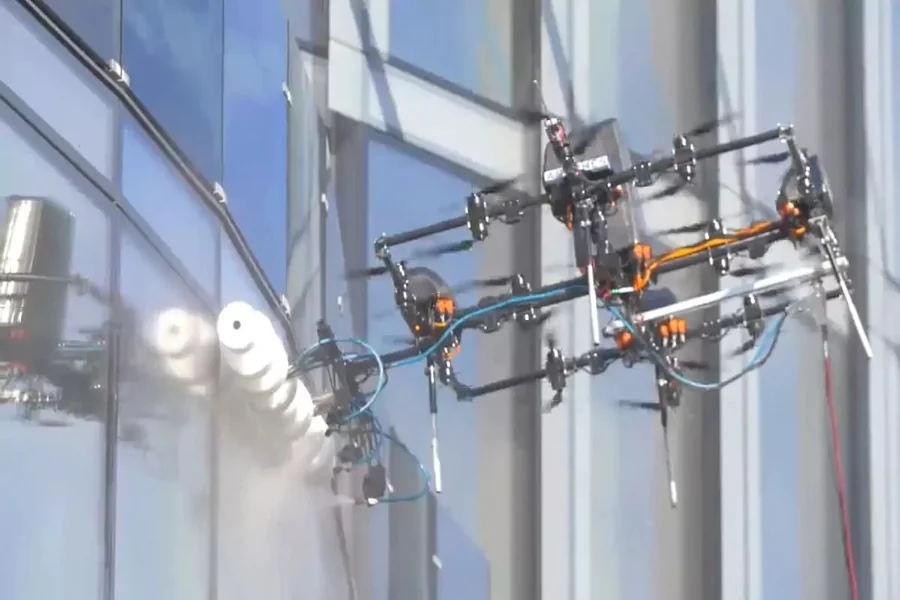
Cleaning the windows of skyscrapers has always been a task fraught with risks and challenges. Traditional manual cleaning methods require workers to hang hundreds of feet above the ground, bringing inherent safety concerns. However, with technological advancements, window cleaning services are now experiencing a transformative change, especially in Australia.
Introducing Drone Window Washing Services
The rise of drone window washing service providers marks a significant shift towards safer and more efficient building maintenance in urban landscapes. Drones now offer a solution that mitigates many of the dangers associated with high-rise window cleaning, while also offering the potential for cost savings and reduced cleaning times.
Enhanced Safety with Drone Technology
An underlying advantage that drones bring to the world of window cleaning is the increased safety for cleaning personnel. Traditionally, cleaners had to use scaffolds, swing stages, or ropes to reach the exterior of tall buildings—a practice that often came with the risk of falls and accidents. However, by employing drones, these risks are substantially reduced.
Efficiency and Accessibility
Another compelling reason for the adoption of drone technology in window washing tasks is the efficiency it offers. Drones are capable of reaching areas that are either too risky or impossible for humans to access. This not only ensures comprehensive cleaning but also significantly cuts down on the time and labour required.
Integration of Anchored Height Safety Systems
Despite the remote nature of drone window cleaning, human oversight and occasional intervention is still necessary. For these circumstances, it’s imperative that buildings are equipped with anchored height safety systems. These safety measures ensure that any on-site personnel supervising or maintaining drone operations can do so with the best possible protection against falls.
Ensuring Compliance and Safety
The design and installation of anchored height safety systems have to comply with stringent regulations to ensure the safety of individuals working at heights. These systems are designed to support the occasional hands-on tasks that might be needed to supplement the work of drones, such as inspections or manual cleaning of areas that require special attention.
Combining Technologies for Complete Solutions
Forward-thinking window cleaning services are now integrating drone technology with existing height safety systems to ensure a complete and thoroughly safe solution for skyscraper maintenance. This holistic approach is fast becoming the standard in Australia’s window cleaning industry.
Sustainable Practices and the Environment
As environmental issues take centre stage globally, the cleaning industry must also adapt to meet new standards for sustainability. Drone window cleaning can contribute significantly to this cause by using less water and detergents, as well as reducing the carbon footprint associated with the transportation of traditional cleaning equipment.
Minimal Disturbance and Noise Pollution
Aside from ecological considerations, drones also offer the advantage of creating less disturbance. Unlike manual cleaning that often requires the setting up and dismantling of scaffolding or the use of noisy machinery, drones operate relatively quietly and do not disrupt the daily activities of building occupants or the surrounding community.
Adapting to Urban Architectural Complexity
The architectural complexity of modern skyscrapers in Australia’s metropolitan centres can present unique challenges for traditional window cleaning methods. Drones are adaptable and can manoeuvre around unconventional building shapes, ensuring that every glass panel, irrespective of its location on the building, is reached and cleaned.
Training and Expertise in Drone Operations
The practical application of drones for window washing requires a team of skilled operators. Expertise in flying drones, especially in challenging urban environments, is of paramount importance. It is not enough to have the technology; the technicians operating these drones need comprehensive training and a good understanding of aeronautics and robotics.
Regulatory Compliance
In addition to skills, drone operators must navigate a web of regulations and permissions. The Australian Civil Aviation Safety Authority (CASA) governs the use of drones and requires operators to adhere to specific guidelines to ensure safety and privacy.
Window Cleaning: A Stepping Stone to Broader Drone Use
While window cleaning is a primary application for drone technology in building maintenance, the use and potential of these aerial devices are far broader. From inspection to repair, drones are beginning to reshape how facility managers approach the upkeep of high structures—not only increasing safety but also setting a new standard for building maintenance efficiency.
Conclusion: The Future Skyline of Building Maintenance
Drone window washing services represent a formidable leap forward in building maintenance. In Australia, where innovation meets necessity, the adoption of drones for window cleaning is setting a precedent that other countries are poised to follow. As technology progresses, it’s expected that drones will become even more integrated into the maintenance routines of the skyscrapers that dominate our urban landscapes.
Ultimately, the use of drone window washing services in Australia is a leading example of how combining cutting-edge technology with essential safety systems like anchored height safety can revolutionise an entire industry—ushering in a new era of skyscraper maintenance that is safe, efficient, and sustainable.