
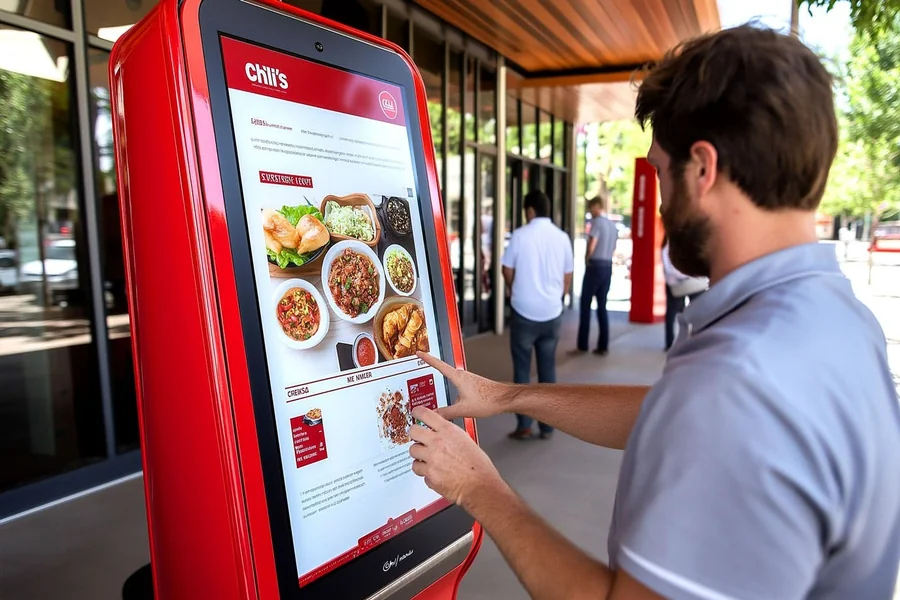
Not too long ago, a typical dining experience relied entirely on waitstaff. You’d sit down, glance at a menu, wait for someone to take your order, and hope nothing was lost in translation between the table and the kitchen. It was a system that mainly worked, but one that occasionally caused frustration: slow service during peak hours, misheard requests, and the pressure of ordering quickly when staff were busy.
Fast forward to today, and the rise of the restaurant kiosk has quietly reshaped the way diners interact with their favourite eateries. Whether it’s fast-casual spots, busy food courts, or modern cafés, kiosks are popping up everywhere, offering customers speed, control, and a frictionless ordering experience.
And while the shift feels sudden to some, it has been in motion for years, driven by changing customer expectations, labour shortages, and the global surge in digital technology.
So, what exactly is behind this transformation? And why are restaurant kiosks becoming such an integral part of modern dining? Let’s take a closer look.
1. The Speed Demon: Removing the Queue Bottleneck
The queue is the greatest enemy of a quick-service restaurant (QSR) during peak lunchtime. One human cashier is a bottleneck; several kiosks are a multi-lane highway.
- Parallel Processing: Customers can now go directly to a digital screen and bypass the line, instead of waiting until a counter becomes available. This enables three or four individuals to place and pay for orders simultaneously. This is just parallel processing, which significantly reduces wait times and boosts throughput when the sites are in full swing.
- Customer Control: Customers feel comfortable and are not hurried through the menu because they do not have to worry about a queue of customers behind them or a staff member impatiently waiting to serve them. They are sure to inspect the ingredients, personalise their orders (additional bacon, skip the aioli), and pay when they are ready. This enhanced feeling of control results in a much smoother, less stressful experience.
- Instant Kitchen Flow: The request is sent directly to the Kitchen Display System (KDS) when the customer taps Confirm Order. No manual re-entry by a cashier, so the time lag between the counter and the cook is eliminated.
2. Silent Salesperson: Increasing the Bottom Line
The restaurant kiosk is the most effective salesperson you will ever have. The kiosk is also programmed to always and intelligently upsell, unlike a staff member who may not remember or be overly busy.
- Regular Upselling: Kiosks are experts at recommendation. They do not forget to ask, “Would you like to make that big?” or “Add a side of dipping sauce?” They frequently feature high-quality, attractive imagery of high-margin extras (such as desserts or specialty drinks) that drive impulse buying.
- Greater Average Order Value (AOV): Customers tend to spend substantially more than Average Order Value, when placing an order at a self-service kiosk. The absence of social pressure, coupled with visual merchandising, sounds like magic and makes diners browse the whole menu and even have a bite.
- Dynamic Promotions: Promotions may be changed instantly, or high-margin items can be emphasised depending on the time of day, the weather, or ingredient availability. This flexibility can enable you to make the most profit on each deal.
3. Labour Allocation: Not Eliminating, Transforming Roles
Among the most significant changes the restaurant kiosk has caused is the repositioning of staff roles, which is vital in a tight labour market.
- Value-Add Focus: Kiosks replace the tedious, low-value order-taking process. This does not imply that there are fewer jobs; it just means the existing team may be reorganised into more valuable positions. Employees will shift their focus to food preparation, quality control, food delivery to tables, and customer experience, including greeting guests, assisting with kiosk navigation, and ensuring the dining area is clean and tidy.
- Uniformity of Service: Kiosks offer uniformity in service delivery through automated transactional processes that are not affected by employee training or attrition. This is an enormous strength in managing a hectic hospitality company.
- Less Training Intensity: It takes time to train a new employee to master using a POS, cash handling, and memorising all the upsell offers. The only downside of a kiosk is that it requires minimal setup and practically no further training for the ordering process itself.
4. Zero Errors: The Accuracy Advantage
Bad communication between the customer, the cashier, and the kitchen is an irritant that leads to frequent food waste.
- Customer Input, Zero Misheard: The customer inputs his order, and there are almost no errors. Those chances of a server misunderstanding no onions or confusing two similar orders are eliminated. This significantly enhances the accuracy of orders.
- Less Waste, More Margin: Reducing the number of incorrect orders means less food is remade and thrown away. This is a direct decrease in food waste, which is an important factor in securing the very low profits of any food company.
The restaurant kiosk represents a significant evolutionary step for the hospitality industry. It’s a technology that addresses two massive challenges at once: meeting the customer’s demand for instant, autonomous service and providing a viable solution to rising labour costs and staffing instability. By making every transaction faster, more accurate, and more profitable, the kiosk isn’t just taking orders it’s securing the future of the restaurant business.