
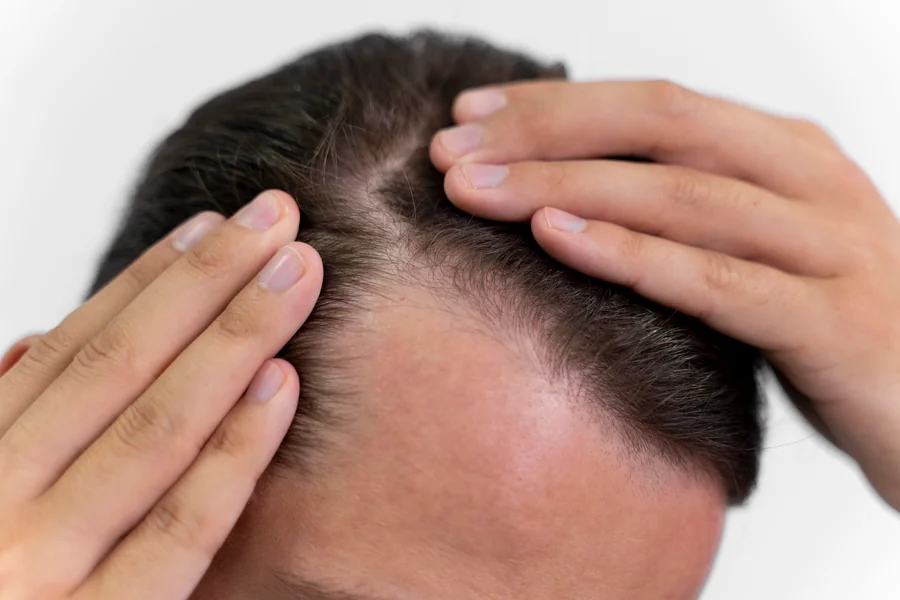
Genetics, medical conditions, hormonal changes, and stressful events — there are numerous causes of hair loss in men and women. Some people experience minor hair thinning or shedding, while others find themselves going bald.
Whatever the reason, losing your hair can be emotionally difficult for many people. Fortunately, there are different ways to treat hair loss. Here’s a closer look:
Medication
The most common way to treat hair loss and stimulate hair regrowth is to take prescription medication. Your dermatologist will recommend a medicine depending on your:
- Age
- Extent of hair loss
- Cause of hair loss
- Overall health
- Plans for getting pregnant
Common medicines for treating hair loss include:
Finasteride
It is an FDA-approved medication for treating male pattern baldness. Finasteride is an oral medication and can slow down hair loss by blocking Dihydrotestosterone (DHT), a hormone that causes hair thinning.
Spironolactone
This is used to treat female pattern baldness. Spironolactone can reduce hair loss and boost hair thickness.
Minoxidil
It is an over-the-counter topical medication that can help manage early hair loss. Minoxidil should be applied to the scalp directly every day. It tends to be more effective when used along with another treatment for hair loss.
Corticosteroids
These are injected into the thinning or balding areas of your scalp. Corticosteroids are considered effective for those with autoimmune hair loss conditions like alopecia areata.
Hair Transplant Techniques
If you’re experiencing extensive hair loss and are over the age of 25, you can consider getting a hair transplant. Best hair transplant Sydney clinics offer three of the most popular transplant methods. Here’s a brief explanation:
FUT
Follicular unit transplantation (FUT) involves removing a strip of scalp containing hair follicles from a donor site (usually the sides or back of the head). The strip is 0.5 to 1.5 cm wide and 3 to 30 cm long. The dissected follicular units are transplanted into thinning or balding areas of your scalp.
FUT can ensure a high number of grafts in a single session. It also takes less time. The donor site ends up having a large linear scar, but it is generally covered by existing hair.
FUE
FUE involves extracting individual hair follicles directly from the donor area and transplanting them into the balding areas. It is minimally invasive and doesn’t leave a visible scar on your scalp.
DHI
Direct hair implantation (DHI) is considered the modern form of FUE. A hair surgeon uses a specialised device called Choi Implanter Pen to implant the extracted hair follicles directly into the scalp.
DHI ensures high precision as your surgeon can control the length, depth, and direction of each implanted hair follicle.
Platelet-Rich Plasma (PRP)
Platelet-rich plasma (PRP) is a hair loss treatment that involves using a patient’s own blood to stimulate hair growth and increase hair density.
Here’s how it works:
A small amount of blood is drawn from your arm and placed in a centrifuge to separate the platelet-rich plasma. This plasma is directly injected into your scalp. Specialists apply numbing cream to reduce discomfort or pain.
PRP treatment can reduce hair loss and stimulate growth.
Lifestyle Changes
If you’re suffering from stress-induced hair loss, making some lifestyle changes is an excellent way to reduce further loss. Eat a balanced diet rich in vitamins, minerals, iron, and protein.