
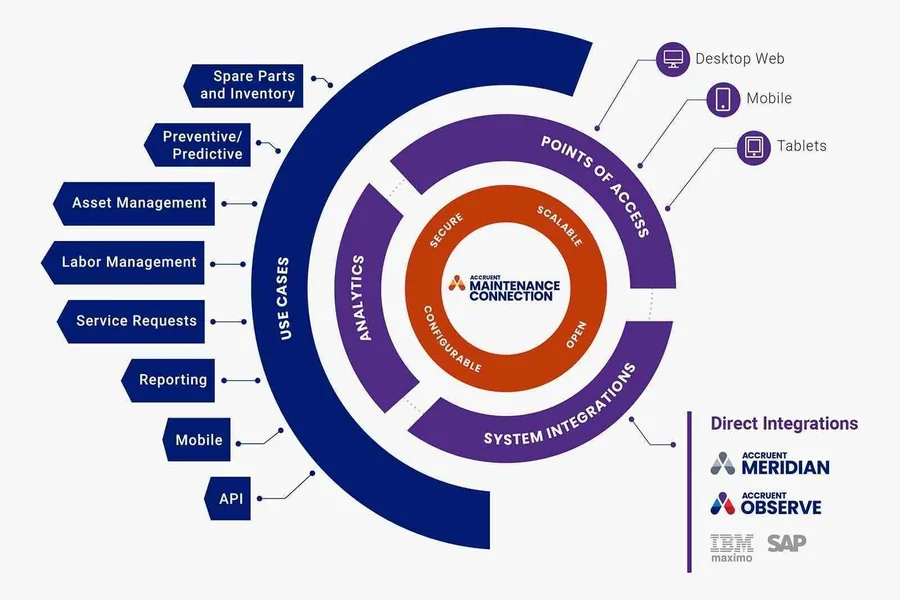
Every organisation, whether in manufacturing, healthcare, education, or government, relies on critical assets to keep operations running smoothly. These assets—ranging from HVAC systems and electrical grids to medical devices and production machinery—are often expensive investments that need to deliver reliable performance for years. The challenge many organisations face is how to extend the life of these assets while minimising costs, avoiding downtime, and ensuring safety. This is where Computerized Maintenance Management Systems (CMMS) play a vital role.
The Need for Proactive Asset Care
Critical assets are prone to wear and tear over time. Traditional maintenance practices often rely on fixing issues once they occur, which can shorten asset lifespan and increase costs. A CMMS changes this reactive approach by enabling proactive asset care. Through scheduled preventive maintenance and regular inspections, facilities teams can identify problems early, correct them before they escalate, and ensure that assets remain in optimal working condition.
Preventive and Predictive Maintenance
One of the greatest strengths of CMMS lies in preventive and predictive maintenance. Instead of waiting for an asset to fail, the system schedules timely interventions, such as oil changes, part replacements, or calibration checks. In addition, predictive maintenance uses historical and real-time data to forecast when an asset is likely to need servicing. This not only avoids unexpected breakdowns but also maximises the useful life of equipment. Many organisations find that combining CMMS with Maintenance Management Software enhances their ability to automate workflows and track asset performance more effectively.
Improved Asset Tracking and Documentation
A CMMS provides a digital record of every maintenance activity, repair, and inspection tied to each asset. This creates a complete history that helps maintenance teams understand performance trends and recurring issues. With clear documentation, it becomes easier to make informed decisions about whether to repair, upgrade, or replace equipment. Accurate records also simplify compliance with safety regulations, audits, and warranty claims, reducing risk and saving time.
Optimising Resource Allocation
Extending the life of assets isn’t just about the maintenance itself—it’s also about how resources are managed. A CMMS helps allocate labour, materials, and tools in the most efficient way. By automating scheduling and task assignments, the system ensures that maintenance teams spend less time organising and more time performing the work that matters. This efficiency reduces unnecessary strain on both staff and assets, leading to smoother operations and longer-lasting equipment.
Enhancing Safety Alongside Longevity
The condition of critical assets directly impacts workplace safety. A poorly maintained boiler, electrical system, or piece of machinery can pose hazards to both employees and facilities. CMMS-driven maintenance ensures that assets are serviced on time, reducing the risk of malfunctions or accidents. Extending asset life also means maintaining them in safe, compliant condition, which protects both workers and organisations.
Data-Driven Decision Making
One of the most valuable benefits of CMMS is its ability to collect and analyse data. This data reveals insights into how assets are performing, what issues are most common, and where costs are highest. By leveraging these insights, organisations can adjust maintenance schedules, improve purchasing decisions, and implement better asset care strategies. Data-driven planning ultimately helps extend asset life by ensuring every decision is based on real performance metrics rather than guesswork.
Supporting Long-Term Sustainability
Sustainability is becoming a priority for organisations across industries. Extending the life of critical assets reduces the need for frequent replacements, which cuts down on waste and lowers environmental impact. A CMMS supports this by keeping equipment in service longer and helping facilities align with sustainability goals. Reduced energy usage, optimised maintenance schedules, and fewer premature disposals all contribute to greener operations.
Conclusion
Critical assets represent significant investments, and extending their lifespan is essential for operational efficiency, safety, and cost control. A CMMS empowers organisations to move away from reactive maintenance and adopt proactive strategies that protect assets for the long term. By improving scheduling, documentation, resource allocation, and data analysis, these systems ensure assets operate reliably and safely throughout their lifecycle. In the process, organisations save money, enhance safety, and contribute to sustainability—all while getting the most out of their essential equipment.