
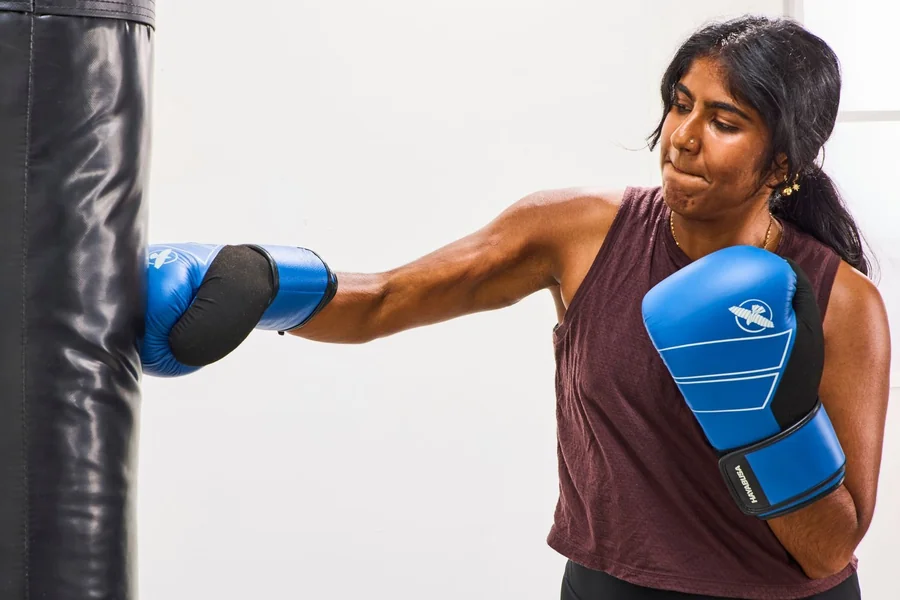
Step into any combat sports gym, and the first thing you’ll notice is the rhythm: the sharp pop-pop of leather hitting focus mitts and the heavy thud of gloves sinking into sandbags. But if you look closely at the hands of the practitioners, you’ll see that not all gloves are created equal.
Choosing the right boxing gloves is the most important gear decision you’ll make. The wrong pair can lead to a nagging wrist injury or a frustrated sparring partner, while the right pair acts as a natural extension of your arm. To find your perfect match, you need to look past the flashy colors and understand how weight, padding, and design intersect with your specific training style.
1. Understanding Boxing Glove Weight
Boxing gloves are categorized by weight, measured in ounces (oz). Generally, more weight means more padding. While your body weight plays a role, your training goal is the ultimate decider.
- 8 oz – 10 oz: Primarily used for professional competition and high-speed pad work. These offer the least protection but the most feedback, allowing you to feel exactly how your knuckles land.
- 12 oz: The “tweener” size. Great for smaller fighters for general training or for heavyweights focusing purely on hand speed and aerobic conditioning.
- 14 oz: The most popular all-rounder. Heavy enough to protect your hands on the bag, but light enough to keep your shoulders from burning out too quickly during a long technical class.
- 16 oz+: The gold standard for sparring. If you intend to hit a human being, you owe it to their safety (and your own) to wear 16 oz gloves. The extra foam absorbs the shock, turning a “concussive” blow into a “thudding” one.
2. Matching Boxing Gloves to Your Training Style
Most boxers eventually own at least two pairs of gloves because the demands of the heavy bag are vastly different from the demands of a live partner.
The Heavy Bag Specialist
If your workouts consist mostly of solo rounds against a 100-pound heavy bag, you need durability. Constant impact against a dense bag compresses foam quickly. Look for “Bag Gloves” or training gloves with high-density, multi-layered foam. You want a stiff, supportive wrist closure to ensure your hand doesn’t “fold” if you land a hook at an awkward angle.
The Pad Work & Speed Demon
When working focus mitts with a coach, precision is king. You want a compact glove that isn’t too “pillowy.” A smaller profile allows you to slip through the coach’s defenses and snap your punches. Many fighters prefer 10 oz or 12 oz gloves here to emulate the feel of a real fight.
The Sparring Partner
Sparring is about technical growth, not hurting your teammates. Sparring-specific gloves feature “soft” or “pillowy” foam. Unlike bag gloves, which are designed to protect the wearer, sparring gloves are designed to protect the receiver. Safety tip: Never use your “bag gloves” for sparring. Over time, hitting the bag makes the foam hard and crusty, which can cause cuts and injuries to your partner.
3. Muay Thai vs. Western Boxing Styles
It’s a common mistake to think all boxing gloves are the same. If you are training Muay Thai or Kickboxing, you need a glove that allows for clinching.
Traditional Western boxing gloves are often quite rigid to keep the wrist straight for punching. However, Muay Thai gloves are designed with more flexibility in the palm and a shorter cuff. This allows you to open your hand slightly to catch a kick or wrap your arms around an opponent’s neck in the clinch. They also tend to have more padding on the sides of the hand to help block incoming head kicks.
4. Materials and Closure: Velcro vs. Laces
- Velcro (Hook-and-Loop): The practical choice. You can put them on and take them off by yourself in seconds. Essential for group classes where you’re constantly switching between gloves and skipping rope.
- Lace-Up: The professional choice. Laces provide a custom, “casted” fit around the wrist that Velcro can’t match. The downside? You’ll always need a coach or teammate to tie them for you. Save these for serious sparring days or fight night.
YOKKAO Boxing Gloves: Hits Different
Once you know your size and style, the final hurdle is quality. A cheap pair of gloves will lose its shape within three months, leaving your knuckles hitting the leather directly. This is where investing in heritage-quality gear pays off.
YOKKAO’s premium boxing gloves are a favorite among professionals for a reason. Handcrafted in Thailand—the epicenter of striking arts—these gloves are engineered with a specific multi-layer foam system that balances “pop” with protection. Whether you’re looking for the classic feel of cowhide leather or the durability of high-grade microfiber, YOKKAO fuses traditional Thai craftsmanship with bold, modern aesthetics. They are particularly famous for their ergonomic fit, which molds to the natural curvature of your fist, reducing hand fatigue during those grueling 12-round sessions.
Website: https://yokkao.com/collections/boxing-gloves
Conclusion
Choosing the right pair of gloves is about more than just picking a color you like. It’s about respecting your hands and your training partners. If you’re just starting, a high-quality 12 oz or 14 oz training glove is your best friend. As you progress into sparring, add a dedicated 16 oz pair to your bag.
Remember: your hands are your tools. If you treat them well with the right padding and support, they’ll keep hitting targets for years to come.
