
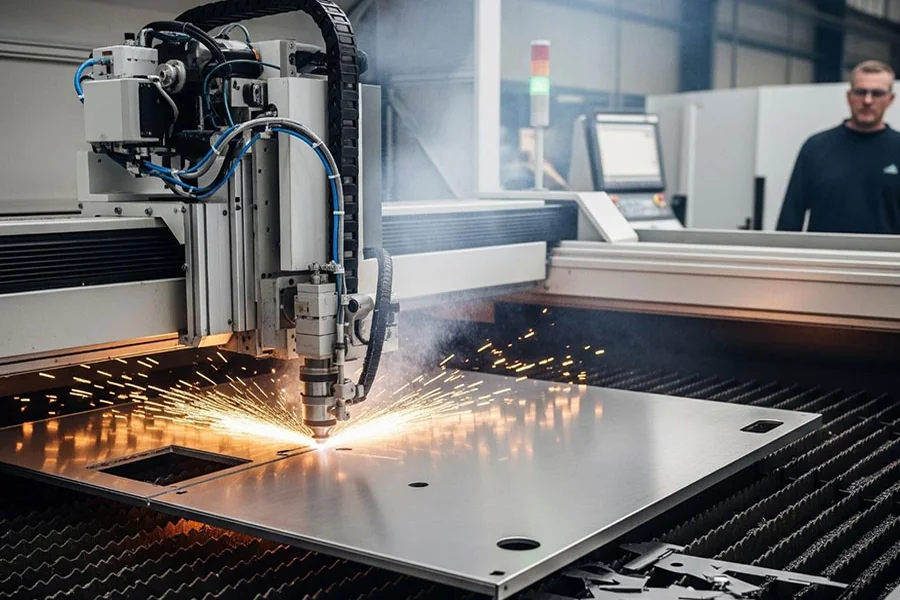
The landscape of precision manufacturing has undergone significant transformation with the advent of advanced technology. Central to this transformation is laser cutting, a process that has revolutionized the way materials are shaped and fabricated. This article explores the impact of laser cutting on precision manufacturing and how it stands as a cornerstone in modern industry.
The Advent of Laser Cutting Technology
Laser cutting uses a high-powered laser to slice through materials, providing manufacturers with an unparalleled level of precision and efficiency. Advanced optics direct the laser beam to a small point on the material, where intense heat melts or vaporizes the material, resulting in a clean, crisp cut with incredibly fine detail.
Not only does laser cutting allow for complex shapes and designs that are impossible with traditional cutting methods, but it also minimizes material waste, proving to be both economical and environmentally friendly. Industries across the board, from aerospace to fashion, have embraced this technology for its unmatched accuracy and versatility.
The Precision of Laser Cutting
Precision is paramount in manufacturing, and laser cutting excels in this regard. Unlike traditional methods that rely on physical contact with the material, such as sawing or milling, laser cutting eliminates the possibility of mechanical distortion. This is particularly important when working with delicate materials or complex geometries that require a high degree of precision.
Manufacturers can now guarantee consistent quality even in large-scale production runs, thanks to laser cutting’s repeatability. The precision of laser cutting enables the creation of parts and components that fit together with minimal tolerances, essential for the functionality of many modern devices and machinery.
The Speed and Efficiency of Laser Cutting
Speed is another critical factor in which laser cutting proves advantageous over traditional methods. The laser’s ability to quickly cut through various materials without the need for tool changes accelerates the production process, significantly reducing turnaround times. Manufacturers are able to take on larger and more complex projects with the confidence that they can meet tight deadlines without compromising on quality.
Moreover, the efficiency of laser cutting extends to its optimised material usage. The technology’s precision means that parts can be nested closely together, maximizing the usage of materials and reducing waste. This level of efficiency not only reduces material costs but also aligns with sustainable manufacturing practices.
Versatility in Materials and Applications
One of the most notable attributes of laser cutting is its versatility. It is adept at cutting a wide range of materials, including metals, plastics, wood, glass, and composites. This flexibility allows for its application across various industries, enabling manufacturers to innovate and experiment with different materials and designs.
From intricate jewellery pieces to large-scale industrial components, laser cutting is instrumental in creating a diverse array of products. It also adapts well to changes in design, allowing for rapid prototyping and customization that would be costly and time-consuming with conventional cutting methods.
The Future of Laser Cutting in Precision Manufacturing
As technology advances, so too does the potential of laser cutting. With the development of faster and more powerful lasers, new software for design and process control, and increased automation, the future of laser cutting appears exceedingly bright.
Manufacturers are constantly exploring new ways to integrate laser cutting into their production processes, pushing the boundaries of what’s possible in precision manufacturing. By leveraging this cutting-edge technology, they will continue to improve quality, reduce production times, and introduce innovative solutions that meet the evolving demands of the market.
Challenges and Considerations in Laser Cutting
Although laser cutting offers numerous advantages, it is not without its challenges. One consideration is the initial investment in high-quality laser cutting machinery, which can be substantial. However, the long-term benefits often outweigh the costs, as businesses benefit from increased efficiency, precision, and reduced labour.
Another factor is the selection of appropriate laser types and parameters for different materials and thicknesses, which requires specialised knowledge and experience. Safety is also a critical concern, necessitating strict procedural and equipment standards to protect operators from laser exposure.
Conclusion: The Integral Role of Laser Cutting in Modern Manufacturing
Laser cutting has cemented its role as an indispensable technology in precision manufacturing. Its exceptional precision, speed, efficiency, and versatility make it an attractive choice for businesses looking to stay competitive in an ever-changing industrial landscape.
For manufacturers who embrace this technology, laser cutting offers a path toward increased productivity, innovation, and ultimately, success. As the world of manufacturing continues to evolve, laser cutting will undoubtedly remain at the forefront of this industrial revolution, shaping the future of production in countless ways.