
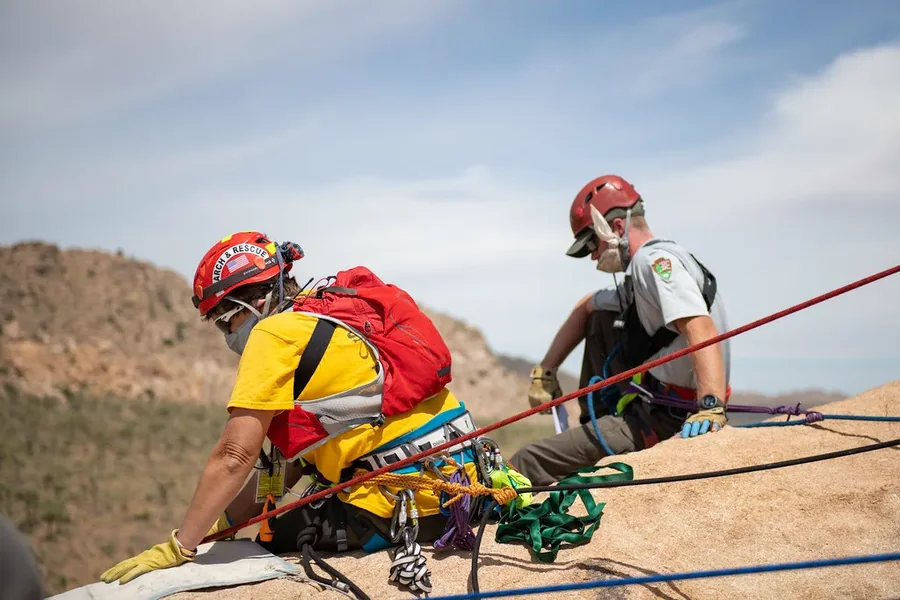
When a call for help goes out from a remote wilderness or a disaster-stricken area, a highly skilled team mobilizes. Search and Rescue (SAR) units operate where others cannot, facing unpredictable environments and life-or-death situations. Their success depends not on luck, but on meticulous preparation. Understanding how these teams get ready for the unexpected reveals a system of continuous training, strategic planning, and specialized equipment.
The Foundation of Readiness: Continuous Training
A SAR team’s effectiveness is built on a foundation of constant practice and skill refinement. This training goes far beyond basic first aid, covering a wide range of disciplines necessary to operate in challenging conditions.
Technical Skill Development
Team members must master a variety of technical skills. This includes advanced navigation using a map, compass, and GPS systems to pinpoint locations with accuracy. Rope-work is also crucial, as teams practice complex rigging for high-angle rescues on cliffs or in ravines. For water-based missions, members train in swift-water rescue techniques to handle fast-moving currents safely.
Medical Proficiency
Every member is trained in emergency medical care, often to an Emergency Medical Responder (EMR) or a higher level. This ensures they can stabilize injuries and treat conditions like hypothermia or dehydration in the field. Training scenarios simulate real-world medical crises, preparing responders to act quickly and effectively when a life is on the line.
Strategic Planning and Mission Readiness
Before a mission even begins, a significant amount of planning takes place. SAR teams develop operational plans and readiness protocols to ensure a swift and organized response.
Pre-Deployment Briefings
When a mission is initiated, the team gathers for a pre-deployment briefing. Here, they analyze all available information: the last known position of the missing person, their potential route, their experience level, and the current weather forecast. This data helps establish a search area and formulate an initial strategy. The team determines which resources are needed and assigns roles to each member.
Scenario-Based Drills
To prepare for the chaos of a real mission, teams regularly conduct drills based on realistic scenarios. These exercises might simulate an earthquake aftermath, a lost hiker in a dense forest, or an avalanche burial. Drills test the team’s coordination, communication, and problem-solving abilities under pressure. By practicing in a controlled setting, they can identify weaknesses and improve their operational procedures.
The Right Gear for the Job
Having the correct equipment is non-negotiable for SAR teams. Each piece of gear is chosen for its reliability, durability, and function. While individual members have personal kits, teams also maintain a cache of specialized equipment ready for deployment.
Essential Team Equipment
A standard team kit includes comprehensive medical supplies, technical rescue gear like ropes and harnesses, and navigation tools. Communication is another critical component. A team may carry a satellite walkie talkie to maintain contact in areas without cellular service, ensuring the command post and field units can coordinate their efforts seamlessly.
Personal Preparedness
Each responder is responsible for maintaining a personal “ready pack” that can sustain them for at least 24 hours. This pack typically contains water, high-energy food, extra layers of clothing, a headlamp with spare batteries, a personal first aid kit, and an emergency shelter. This personal readiness ensures that each member can function effectively and safely while carrying out their duties.
In conclusion, the ability of Search and Rescue teams to respond to emergencies is a direct result of their deep commitment to preparation. Through rigorous training, strategic planning, and maintaining the right equipment, they stand ready to face the unknown and bring people home safely.