
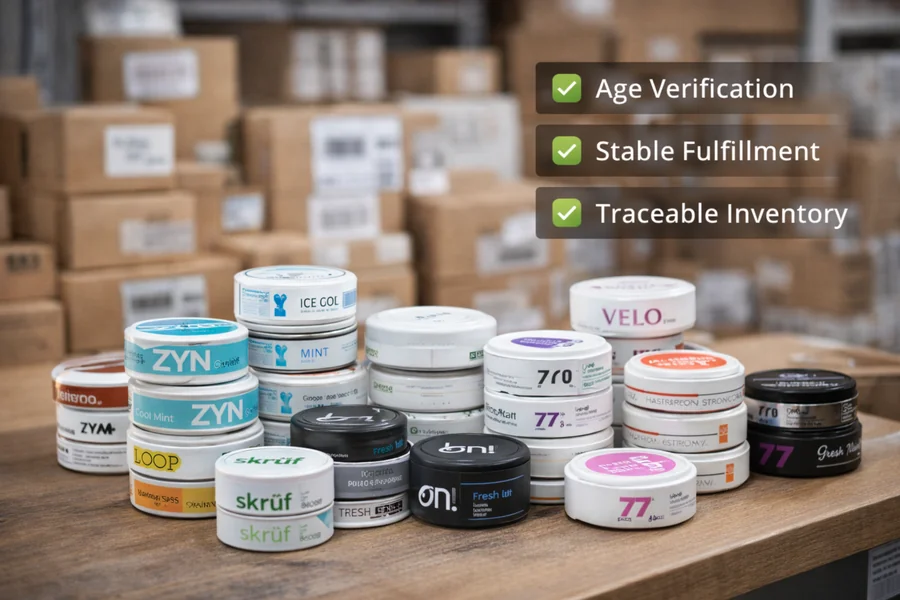
In fast-moving categories, the biggest risk isn’t that you can’t find products—it’s that you can’t keep them consistent. For businesses selling snus and modern nicotine pouches, reliability is the difference between a steady monthly turnover and a string of avoidable problems: delayed restocks, mismatched specs, customer complaints, or compliance questions you can’t answer quickly.
If you’re running a webshop or a physical point of sale, the smart approach is to treat snus procurement like any other regulated supply chain: build around documentation, predictable fulfillment, and clear processes for responsible sales to adults.
Compliance first: your checkout is part of the product
Nicotine products are not a “normal” consumer good. Requirements differ by country, and rules can change. That means your supplier relationship needs to support your compliance, not undermine it.
Before you scale, make sure you can confidently document:
- Adult-only sales flow (age verification where required)
- Product labeling and market suitability for your region
- Clear invoicing and traceability for business accounting
- A returns/damages process that doesn’t turn into disputes
- A consistent point of contact when questions arise
A reliable wholesale partner should make it easier to operate within the rules—especially when you expand into new markets or add new product lines.
Consistency beats novelty in the long run
Trends come and go, but most recurring customers want the same thing every time: availability, predictable product experience, and straightforward delivery. That’s why stock stability and fulfillment speed often matter more than chasing the newest launch.
One practical way to evaluate a supplier is to look at how they structure their wholesale platform. For example, PouchConcept frames itself as a B2B distributor for retailers, webshops, and distributors, emphasizing competitive pricing, stable supply, and fast fulfillment. If you’re researching options, you can review a B2B-focused snus supplier platform and compare it against your own procurement checklist.
A practical checklist for selecting a wholesale partner
To keep the decision grounded, align internally on what “good” looks like for your operation—then ask every supplier the same questions. Here’s a checklist many small teams find useful:
- Catalog breadth: Do they carry multiple brands/categories (e.g., nicotine pouches alongside related lines)?
Fulfillment reliability: Typical dispatch times, packaging quality, and issue handling - Commercial clarity: Wholesale pricing structure, minimums, and payment options
- Support: Named contact or sales support for B2B customers (not just a generic form)
- Scalability: Can they support growth without service dropping when volumes increase?
A final note on tone and responsibility: even when you’re writing marketing copy, it’s worth keeping your messaging adult-focused and compliant. The businesses that last in this category are usually the ones that build trust—by being transparent, consistent, and serious about how they operate.