
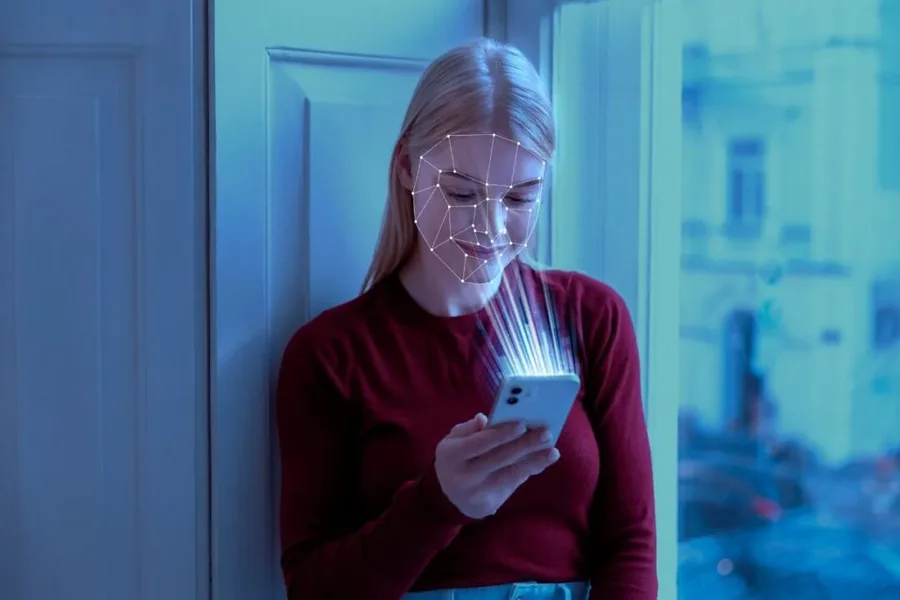
The evolution of beauty standards has always reflected the time in which people live. In today’s digital era, where artificial intelligence and computer vision shape how we perceive the world, beauty has found a new form of measurement through online platforms. Among these, Pretty Scale has gained immense popularity as an online face analysis tool claiming to evaluate a person’s attractiveness using mathematical and AI-driven techniques. Although it may appear like a simple game, its influence reaches deeper—touching psychology, culture, and technology, Block Blast Solver.
What Is the Pretty Scale?
Pretty Scale is a web-based tool designed to analyze the human face and provide a beauty score. Users upload their photos, and within seconds, the system returns an evaluation based on facial symmetry, proportion, and harmony. The site then generates a percentage or numeric score that supposedly reflects how attractive someone is according to mathematical principles.
The core idea behind the оценка внешности от 1 до 10 по фото comes from long-standing theories of aesthetics that associate beauty with symmetry. The algorithm draws inspiration from the Golden Ratio, a formula that appears throughout nature, art, and architecture, often considered to represent ideal proportions. The Pretty Scale applies similar geometric logic to human features, attempting to interpret beauty as a form of numerical balance.
Despite its seemingly scientific premise, Pretty Scale has become more of a social curiosity than an exact measurement. Millions of users engage with it not for scientific validation but to experience the thrill of seeing how artificial intelligence perceives their face.
How the Pretty Scale Works Behind the Scenes
When someone uploads an image to Pretty Scale, the algorithm first detects key landmarks on the face. These points include the eyes, eyebrows, lips, nose tip, cheekbones, and chin. Using these coordinates, the system measures distances, angles, and ratios to assess how symmetrical or balanced the features are.
If the eyes are evenly spaced, the jawline proportionate, and the nose length aligns with the facial midpoint, the system might give a high rating. If the proportions deviate from its programmed standard, the score drops. The Pretty Scale’s results are accompanied by short comments like “You have good facial symmetry” or “Your face is too narrow.” These phrases give the illusion of a personalized review, though they’re automatically generated.
The process is fast, objective in appearance, and easy to use. Yet beneath the surface lies a fundamental tension between technology’s mechanical logic and the emotional sensitivity of beauty evaluation.
The Appeal of Quantifying Beauty
Why would someone care about a number that supposedly defines how beautiful they are? The answer lies in human psychology. People are naturally drawn to metrics—they simplify complex ideas. In a world obsessed with data and validation, even beauty has become a measurable experience.
For many, Pretty Scale is harmless entertainment. It satisfies curiosity in the same way personality quizzes or astrology readings do. However, the difference is that Pretty Scale uses technology, which carries a perception of objectivity. Because it’s a machine, users often assume its judgment is impartial. The irony, of course, is that AI systems are far from neutral; they mirror the data and design choices that built them.
At its core, the fascination with Pretty Scale reflects a desire to understand oneself. People want feedback—confirmation that they are attractive or at least fit within socially accepted ideas of beauty. The digital score becomes a reflection not only of appearance but of identity and worth.
Beauty Through the Lens of Mathematics
The connection between beauty and mathematics is not new. Ancient Greek philosophers believed that proportion and symmetry defined ideal beauty. The Renaissance revived this belief, and artists such as Leonardo da Vinci used geometry to construct faces that embodied balance and harmony.
Pretty Scale takes that historical idea and modernizes it through artificial intelligence. It assumes that if mathematical balance represents beauty, then technology can replicate that assessment through data. While this concept may hold theoretical merit, it ignores one crucial aspect—human beauty is far more diverse than mathematics can capture.
Each culture defines attractiveness differently. Some value round faces and softer features, while others admire angularity or bold structure. By using a single universal ratio, the Pretty Scale simplifies beauty into a limited model that may unconsciously favor certain ethnic or cultural norms.
The Limitations of an Algorithmic Mirror
Despite its widespread use, Pretty Scale is not without controversy. One of its most significant limitations is the narrowness of its dataset. Like many early AI projects, it likely relied on reference images that did not equally represent the full diversity of human faces across different races, ages, and genders.
As a result, the algorithm may produce biased results. Users of darker skin tones or non-Western facial structures often report lower scores compared to those with European features. This does not mean the tool is intentionally discriminatory—it simply reflects the imbalance in the data from which it was built.
Another limitation lies in the photograph itself. Lighting, camera angles, expressions, and image quality can drastically alter results. Even minor variations, like a smile or head tilt, can shift the score by several points. This inconsistency reveals that Pretty Scale’s results are best viewed as approximations rather than absolute truths.
The Psychological Impact of Beauty Scores
While many users treat Pretty Scale as a novelty, the emotional effect of a low score should not be underestimated. Receiving a number that labels one’s face as below average can be disheartening, especially for younger users still developing their self-image.
In today’s digital culture, where beauty is already a source of pressure, such algorithmic ratings can deepen insecurities. A numerical verdict from a seemingly neutral machine carries psychological weight. People may internalize the result, interpreting it as a reflection of their real-world attractiveness or social value.
Conversely, a high score can create a fleeting sense of confidence but also foster dependence on external validation. The danger lies in equating algorithmic approval with personal worth. True confidence should arise from individuality and self-acceptance, not a percentage displayed on a website.
The Role of Social Media in Pretty Scale’s Popularity
Pretty Scale’s viral fame is inseparable from the influence of social media. Platforms like TikTok, YouTube, and Instagram have amplified its reach through challenges and reaction videos. People share their results online, comparing scores with friends or celebrities, turning beauty evaluation into a collective spectacle.
This visibility fuels engagement but also intensifies comparison culture. The fun of self-analysis can quickly turn into competition, where users measure their appeal against one another based on digital numbers. What began as a playful experiment becomes a source of subtle social hierarchy.
Nevertheless, social media also enables critical dialogue. Many creators use Pretty Scale ironically, exposing its limitations and emphasizing self-love over algorithmic judgment. In that sense, the platform has sparked a broader conversation about how technology influences beauty standards and mental health.
Beyond the Numbers: The Human Element of Beauty
While Pretty Scale attempts to quantify attractiveness, it overlooks the emotional and cultural dimensions of beauty. A face is more than the sum of its geometric parts. Expressions, warmth, confidence, and personality all contribute to how someone is perceived.
True beauty transcends proportion. It exists in movement, in laughter, in the spark of emotion that no algorithm can capture. Two people with identical measurements may evoke entirely different impressions depending on how they carry themselves.
Moreover, beauty is deeply subjective. What one person finds captivating, another may not. Trying to standardize it through AI is like attempting to measure art with a ruler. Technology can recognize symmetry but cannot interpret charm, individuality, or presence—the qualities that define real attractiveness.
Ethical Reflections and the Responsibility of Technology
As AI continues to advance, questions about ethics and responsibility become more urgent. Should machines be allowed to judge human appearance? And if so, what safeguards should exist to ensure fairness and inclusivity?
Developers must consider the potential psychological and cultural consequences of beauty analysis systems. Tools like Pretty Scale are relatively harmless when used for fun, but they highlight the risk of a future where appearance-based algorithms influence hiring, dating, or even healthcare decisions.
Ethical AI design requires transparency—users should know how data is used, what standards the algorithm applies, and what limitations exist. Education is equally vital. People must understand that such tools are not definitive reflections of their worth or identity.
The Future of AI-Based Beauty Assessment
The next generation of beauty technology is already evolving beyond numerical scores. Instead of rating attractiveness, new AI tools are beginning to offer personalized feedback, such as identifying flattering hairstyles, makeup styles, or camera angles.
Developers are also exploring ways to eliminate bias by training algorithms on more diverse datasets that represent different ethnicities and body types. In doing so, future systems could promote inclusivity and celebrate beauty in all its forms.
Some researchers even envision AI that focuses on emotional beauty—analyzing expressions and confidence rather than geometry alone. Such tools would shift the focus from judgment to empowerment, encouraging self-improvement without comparison.
Cultural Shifts Toward Authentic Beauty
As society grows increasingly aware of the unrealistic standards perpetuated by media and algorithms, there is a parallel cultural movement celebrating authenticity. The rise of the “no-filter” trend and campaigns promoting body positivity reflect a collective desire to reclaim individuality from digital perfection.
Test de belleza represents both the fascination and the danger of this technological era. It mirrors humanity’s need for approval while simultaneously challenging us to rethink what beauty means. The algorithm may not lie, but it doesn’t tell the full truth either.
In recognizing its limitations, users can transform the tool from a source of anxiety into an opportunity for reflection. It can remind us that beauty is not about achieving mathematical perfection but about embracing the unique harmony of our imperfections.
With Techsslaash AI, machine learning systems learn automatically from experience, recognize patterns in data, and make intelligent predictions, helping businesses optimize operations, improve customer experiences, and achieve faster, data-driven decision-making.
Conclusion: Redefining Beauty Beyond Algorithms
Pretty Scale stands at the intersection of science and emotion, offering a glimpse into how technology interprets one of humanity’s most enduring mysteries. It simplifies beauty into symmetry and proportion, providing entertainment, curiosity, and sometimes controversy. But its greatest lesson lies in its imperfection.
No algorithm can capture the depth of a person’s beauty, because beauty is more than geometry—it is identity, confidence, and spirit. Technology may continue to evolve, but the human experience remains immeasurable.
In the end, the Pretty Scale does not define who we are. It merely reflects our digital fascination with self-perception. Real beauty cannot be coded or scored; it lives in authenticity, kindness, and self-awareness. And perhaps, in realizing this, we take back the power that numbers have over our sense of worth—reaffirming that no program can quantify what it means to be truly beautiful.