
Introduction
Tech careers in India are evolving faster than ever, and two career paths are leading the race:
- DevOps certification
- Cloud certification
Both open doors to excellent growth opportunities. Many professionals — from beginners to experienced IT engineers — struggle with one big question:
Should I first complete cloud certification (AWS/Azure/GCP) or DevOps certification?
This blog provides a clear, structured comparison to help you choose the most efficient path for your career goals.
What Is a DevOps Certification?
A DevOps certification verifies your skills in automation, CI/CD pipelines, infrastructure management, and production operations.
Common DevOps certifications:
| Certification | Focus Area |
| Azure DevOps Engineer Expert (AZ-400) | CI/CD + Azure ecosystem |
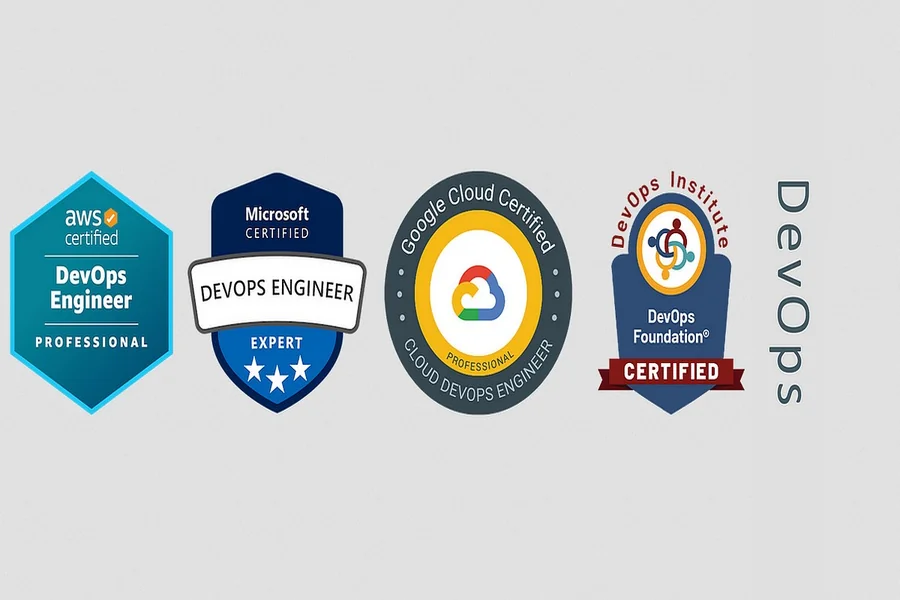
| AWS DevOps Engineer Professional | Cloud automation + operations |
| Docker, Kubernetes certifications | Containerization + orchestration |
| DevOps Foundation | Basic DevOps principles |
A DevOps certification shows you can implement fast, reliable, automated software delivery.
It’s about tools + automation + operational excellence.
What Is a Cloud Certification?
Cloud certifications validate your ability to build and manage cloud services like:
- Compute (EC2/VMs)
- Storage (S3, Azure Storage)
- Networking (VPC, VNets)
- Security & IAM
- Databases & Serverless
Popular cloud certifications:
| Certification | Cloud Platform |
| AWS Solutions Architect | Amazon Web Services |
| Azure Administrator | Microsoft Azure |
| Google Associate Cloud Engineer | Google Cloud |
Cloud certification builds your knowledge of how cloud services work.
Skill Differences: DevOps vs Cloud
| Category | DevOps Certification | Cloud Certification |
| Focus | Automation & CI/CD | Cloud design & architecture |
| Key Skills | Pipelines, Docker, Terraform | Networking, compute, identity |
| Business Value | Faster deployments & stability | Cost optimization & scalability |
| Hands-on | Strong requirement | Strong requirement |
| Tools | Jenkins, Ansible, Kubernetes | AWS/Azure/GCP services |
DevOps = Deployment & Operations
Cloud = Infrastructure & Platforms
Modern companies need both — but the journey order matters.
Which Certification Do Companies Prefer?
Across hiring platforms (India market analysis):
| Role | Preference |
| DevOps Engineer | DevOps + Cloud basics |
| Cloud Engineer | Cloud + basics of automation |
| SRE | Strong DevOps + Cloud |
| Infrastructure Engineer | Cloud core skills |
Most DevOps job descriptions require knowledge of AWS or Azure
→ but not all cloud roles require DevOps tools.
This means:
➡ Cloud skills can help you enter DevOps faster
➡ DevOps alone may limit your opportunities early
Salary Comparison & Job Roles in India
| Job Role | Avg Salary (India) |
| Cloud Support Engineer | ₹4–9 LPA |
| Cloud Engineer | ₹6–15 LPA |
| DevOps Engineer | ₹8–20 LPA |
| SRE (Advanced) | ₹12–30+ LPA |
Companies pay DevOps engineers more because:
✔ They improve deployment speed
✔ They reduce operational failures
✔ They enable automation across teams
How DevOps Training & Cloud Training Complement Each Other
| DevOps Training Helps You… | Cloud Training Helps You… |
| Build pipelines & automation | Build infrastructure to run apps |
| Manage deployments | Use cloud best practices |
| Work with containers | Secure and scale apps |
| Be production-ready | Understand what apps run on |
Together, they form a complete Cloud DevOps Engineer skill set — the most in-demand role today.
Which Should You Learn First?
BEST Path for Maximum Job Opportunities:
Cloud Fundamentals → DevOps Training → DevOps Certification
Why?
Because DevOps tools rely on cloud services:
- Deploying CI/CD pipelines without AWS or Azure knowledge becomes confusing
- Infrastructure as Code (Terraform, Ansible) is cloud-native
- Kubernetes clusters run on cloud
Learning cloud basics first helps you understand the environment DevOps automates.
If You Are a Complete Beginner
Start with:
✔ Cloud fundamentals
✔ Linux
✔ Git
✔ Basic networking
Then move into:
✔ DevOps training
✔ DevOps certification
If You’re Already an IT Admin / SysAdmin
You can directly begin with:
➡ DevOps training → then cloud advanced topics
Because you already understand infrastructure basics.
Real-World Career Scenarios
| Background | Recommended Path |
| Non-IT / Fresher | Cloud basics → DevOps training → Certification |
| Software Developer | DevOps training → Cloud specialization |
| IT Support / SysAdmin | DevOps certification → Cloud upskilling |
| Already in Cloud role | DevOps certification next for growth |
| Target: Top salaries | Both — Cloud + DevOps expertise |
You don’t have to choose one forever
But the sequence will determine how fast you grow.
Common Learning Mistakes to Avoid
| Mistake | Impact |
| Learning DevOps tools without cloud knowledge | Confusion & slow progress |
| Only theory — no hands-on | Not employable |
| Skipping fundamentals (Linux, Git) | Struggling in automation |
| Doing too many tools at once | Lack of depth |
| No portfolio | Recruiters ignore resume |
Your progress = Tools + Real Projects + Cloud Context
Final Recommendation
Here is the most realistic and industry-aligned roadmap:
Start → Cloud Fundamentals
(Compute, Storage, IAM, Virtual Networks)
Then → DevOps Training
(Git, Linux, Docker, Jenkins, Kubernetes)
Finally → DevOps Certification
(AWS/Azure DevOps Engineer)
This path ensures:
✔ Hands-on learning becomes easier
✔ Recruiters take you seriously
✔ Faster transition into DevOps jobs
✔ Higher earning potential
Conclusion
There is no competition between DevOps certification and cloud certification — the truth is:
They complement each other,
but cloud foundations come first.
A DevOps engineer without cloud knowledge struggles with deployments.
A cloud engineer without DevOps skills struggles to automate and scale.
The strongest career path in 2025 and beyond:
Cloud + DevOps → Cloud DevOps Engineer
This combination helps you land roles that are
???? Future-proof
???? High-paying
???? Globally in-demand
Your certification journey is not just a learning plan —
It is your gateway to a modern tech career.
