
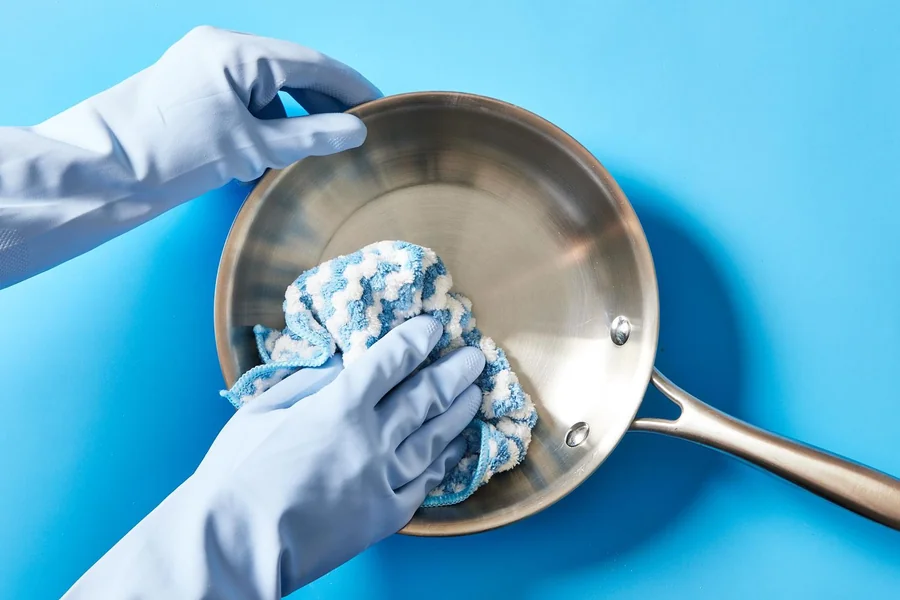
Cleaning stainless steel cookware is not difficult or time consuming. Though made from durable and versatile material that resists corroding and rusting, stainless steel cookware will eventually accumulate food and grease residue, as well as develop discoloration. As a result, cookware loses its shine. Regular maintenance can improve the performance of your cookware and help it last a lifetime.
Use these tips to keep your stainless steel cookware looking brand new.
Importance of Regular Cleaning
There are several benefits to cleaning your cookware after every use. Regular cleaning:
– Gets rid of food and grease residue
– Prevents cookware from discoloring or staining
– Keeps cookware shiny and looking new
– Makes cookware last longer
– Improves cookware performance
With regular maintenance, stainless steel cookware can last a lifetime.
Clean After Every Use
Let cookware cool completely before washing to avoid potential warping caused by putting a hot pan in cold water.
To wash, use:
– Warm water
– Mild dish soap
– Soft sponge or cloth
Don’t forget to dry your cookware after rinsing. Water left to sit will leave spots.
Stuck-On Food
There are times when food can burn and stick to the bottom of cookware and a little bit of soap just won’t cut it. Instead of laboring unnecessarily to scrub, try the following:
- Cover the food with water and fill the cookware.
- Add a few drops of dish soap.
- Bring the water to a gentle boil for a few minutes.
- Let it cool slightly.
Use a wooden spoon or soft sponge to loosen the residue.
Food should come off more easily.
How to Remove Burnt Marks
Burnt stains are common when cooking at high temperatures.
To clean burnt cookware:
- Add water to the pan.
- Add a few tablespoons of baking soda.
- Simmer for a few minutes.
- Let cool.
- Gently scrub with a soft sponge.
Baking soda will help lift the stain and will not harm the stainless steel.
Removing White Water Spots
White spots are the result of hard water.
To remove them:
- Mix water and white vinegar in equal parts.
- Use the solution to the affected area.
- Let it sit for a few minutes.
- Rinse and dry.
This will help bring the shine back to the stainless steel cookware.
Dealing with Discoloration
Burnt stains are not the only thing that can be caused by cooking at high heats.
Blue, rainbow, or brown discoloration is also a possibility.
A simple vinegar solution can help:
- Pour a small amount of white vinegar onto a soft cloth.
- Rub the discolored area.
- Rinse with water.
- Dry completely.
Discoloration should go away and the stain should be clean.
Avoid Harsh Cleaning Tools
Abrasive cleaning tools can scratch the surface.
Avoid:
– Steel wool
– Metal scrubbers
– Harsh chemical cleaners
– Bleach-based products
Instead use soft sponges, microfiber cloths, or scrubbers that will not be abrasive.
Dry Immediately After Washing
Air drying cookware can lead to water spotting.
What yields best results:
– Soft towel to dry cookware as soon as it’s washed.
– Don’t put cookware away until it is completely dry.
Keeping that for the best results helps cookware maintain that polished look.
Tips to Keep Stainless Steel Cookware Looking New
– Don’t leave pans empty to overheat.
– Use appropriately sized burners.
– Wash cookware as soon as possible to prevent stains.
– Keep Cookware Stored Scratches.
Regular upkeep helps those surfaces stay looking fresh while also keeping the surfaces performing to their best.
Conclusion
Regular upkeep is key to easy cleaning on stainless steel cookware. Regular maintenance requires warm soapy water for an easy clean. For more stubborn stains, burnt marks, and discoloration, baking soda and vinegar work to remove them. Stainless steel cookware is undoubtedly an excellent investment for any kitchen when one considers how it holds its sheen for its lifetime and also for its proper care. Stainless steel cookware is a great reliable and durable investment for any regular kitchen.
