
In 2025, more than 4.9 billion people worldwide are online, yet nearly 60% of global web traffic is exposed to monitoring, tracking, or geo-restrictions. Proxy servers—intermediary systems that route user requests through a third-party server—have become a key tool for maintaining anonymity, bypassing restrictions, and securing sensitive data. Among the most effective solutions are private residential proxies, which use real home IP addresses to enhance privacy and reduce the risk of detection or blocking.
What Is a Proxy?
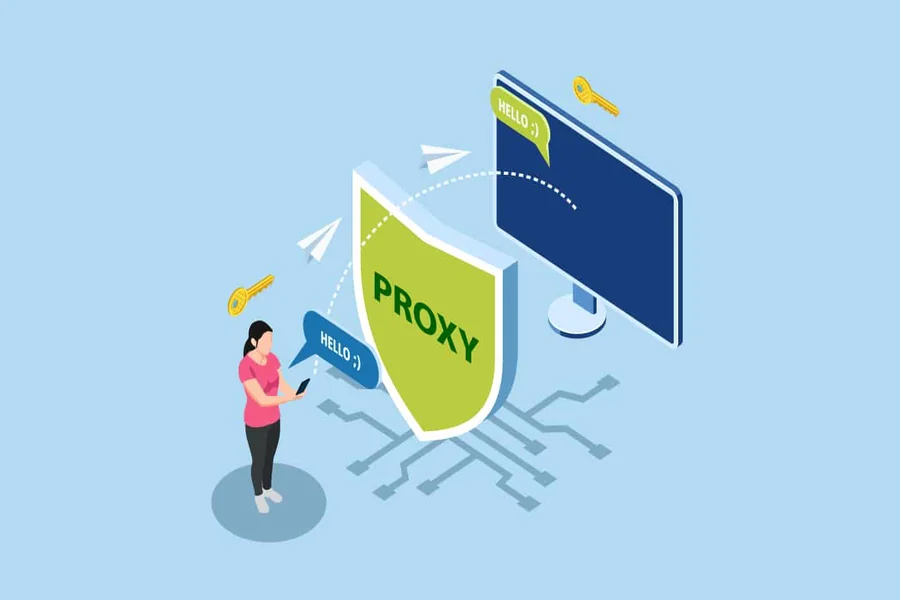
The term proxy means “representative” or “trusted agent.” A proxy server functions as an intermediary between a user and the internet. It receives requests from the user, forwards them to the target server, and then passes the server’s responses back. Essentially, it allows users to interact with websites without revealing their IP address or personal information. Private residential proxies are particularly useful for tasks requiring reliable access to geo-restricted content or multiple accounts, as their IP addresses appear as legitimate home users.
Why Use a Proxy?
Proxies have a wide range of applications across privacy, security, and efficiency:
- Anonymity and Privacy: Mask IP addresses and protect personal data.
- Bypassing Censorship and Geo-Restrictions: Access blocked websites or services in regions with strict internet controls.
- Security Enhancements: Filter malicious traffic and mitigate threats such as DDoS attacks.
- Network Optimization: Cache frequently accessed content to reduce bandwidth load.
- Data Collection and Web Scraping: Gather market and competitor insights. Private residential proxies are often preferred here because they reduce the risk of being blacklisted during repeated requests.
- Multi-Account Management: Manage multiple accounts on social media or e-commerce platforms without triggering restrictions.
- Web Development and Testing: Simulate user activity from different locations and IP addresses.
- Public Wi-Fi Protection: Add a layer of security in open networks.
Types of Proxies
By Function
- Forward Proxy: Sits between the client and the internet, redirecting requests. Useful for bypassing blocks and caching content for faster access.
- Reverse Proxy: Acts as an intermediary for servers, distributing incoming traffic and filtering requests to improve security and performance.
By Protocol
- HTTP Proxy: Handles HTTP requests, ideal for anonymous browsing.
- SOCKS Proxy: Works at a lower level, supporting TCP and UDP protocols, often used for secure data transmission.
- Transparent Proxy: Operates without user awareness, typically for caching and traffic filtering.
- Residential Proxy: Uses real home network IPs, harder to detect or block. Private residential proxies combine residential IPs with exclusive allocation to a single user, maximizing reliability.
By Accessibility
- Free vs. Paid: Free proxies are widely available but often unstable, have compromised IPs, and present security risks. Paid solutions, including private residential proxies, offer reliability and support.
Other Criteria
- IP Protocol: IPv4 vs. IPv6 compatibility.
- Private vs. Shared: Exclusive IP assignment versus shared use among multiple clients.
- Static vs. Dynamic: Fixed versus rotating IP addresses, depending on the use case.
Advantages and Limitations
Advantages:
- Maintains anonymity
- Bypasses censorship
- Enhances web security
- Filters inbound traffic
- Balances traffic loads
Limitations:
- Risk of data leaks with free proxies
- Slower load times due to additional routing
- Some services may restrict proxy access
Proxy vs. VPN
Proxies reroute traffic, while VPNs also encrypt data, providing an extra layer of security. Both serve different roles in digital privacy strategies.
Choosing the Right Proxy
Proxy selection depends on your goals:
- Free proxies may be sufficient for occasional browsing.
- Paid dynamic forward proxies are better for data collection.
- Reverse proxies support web services with heavy traffic.
- Private residential proxies are recommended for consistent access, reliability, and low detectability, such as for multi-account management or geo-specific content testing.
Always review technical specifications, user feedback, and service reliability before selecting a proxy solution.
Conclusion
Proxy servers are essential tools for navigating an increasingly restricted and monitored internet. They provide anonymity, security, and operational efficiency, but should be used responsibly to maximize benefits and minimize risks. Leveraging private residential proxies in particular can offer higher reliability and security for individuals and organizations managing multiple accounts or handling sensitive online operations.
