
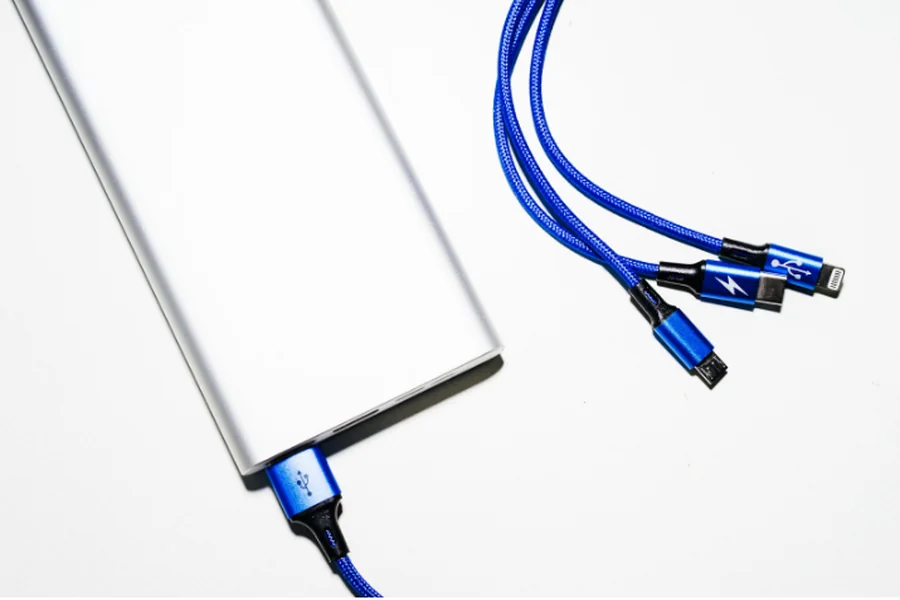
Power banks look simple. A box, a cable, a big number in mAh, and the promise of “five full charges.” The problem is that the biggest number on the packaging is rarely the number that matters. A power bank can be honest and still disappoint, and a dishonest one can look like a bargain until it fails at the worst time.
That’s why power bank talk belongs in the same practical phone-routine world as everything else. A short anchor like x3bet fits naturally into that everyday ecosystem of quick logins, navigation, photos, and scrolling, where battery anxiety shows up fast. The goal is not to buy the largest mAh label. The goal is to buy predictable energy.
The First Truth: mAh Is Not a Universal Language
mAh is a capacity unit, but it depends on voltage. Most power banks use internal cells around 3.6 to 3.7V. Phones charge around 5V (and higher for fast charging). When a power bank converts its internal battery voltage to USB output, energy is lost as heat and conversion inefficiency.
That’s why a “10,000 mAh” power bank does not deliver 10,000 mAh to a phone battery at the phone’s voltage. The honest way to compare is watt-hours (Wh), because Wh already includes voltage. Some brands print Wh clearly. Others hide it. If Wh is missing, that’s already a tiny red flag.
Realistic Math Without Overthinking It
A simple estimate works well. Take the advertised mAh and assume usable output is about 60% to 75% of the label, depending on quality, temperature, cables, and charging speed. High-power fast charging can lower the usable share because conversion losses rise.
So a 10,000 mAh bank often behaves like “6,000 to 7,500 mAh in real life.” A 20,000 mAh bank often behaves like “12,000 to 15,000 mAh.” That’s not a scam by itself. That’s physics.
The Second Truth: Output Power Matters More Than People Admit
Capacity decides how long the power bank lasts. Output power decides what it can actually run. Many cheap power banks advertise huge capacity but provide weak output, like 10W or less. That can mean slow charging, unstable charging, or a phone that keeps dropping in and out of charge while being used.
For modern phones, a bank with USB-C Power Delivery (PD) is often the safest pick, because it supports common fast-charge profiles. For tablets and some laptops, PD is basically required if charging speed matters at all.
The Most Common mAh “Tricks” Buyers Fall For
Before the first list, it helps to name the traps that show up again and again. Some are honest misunderstandings, some are deliberate marketing games.
- Huge mAh number with no Wh listed
The label looks impressive, but real energy output is unclear.
- Capacity measured at the cell voltage only
It’s not wrong, but it’s used to create unrealistic expectations at 5V output.
- “Fast charging” written with no protocol details
Without PD or clear standards, “fast” can mean almost nothing.
- Multiple ports that share one weak output
Two devices plugged in can cut charging speed in half or worse.
- Mystery brand with impossible weight
A “30,000 mAh” bank that feels too light is usually telling a story.
- Cable included that can’t handle the power
A weak cable can throttle charging and create heat.
After recognizing these, a lot of listings start to look less convincing.
What Real Specs to Look For
A good power bank listing shows capacity, Wh, input speed, output speed, and supported protocols. Input matters because slow recharge is a hidden pain. A big bank that takes 12 hours to refill can become annoying fast.
For daily carry, 10,000 mAh with solid PD can be enough. For travel, 20,000 mAh is often the sweet spot. Bigger banks exist, but weight and airline rules can become a factor. If flying is involved, checking the Wh rating is practical, not optional.
The Quality Details That Separate “Okay” From “Reliable”
Battery cells degrade. The better question is how predictably they degrade. A reliable power bank has decent thermal control, proper protection circuits, and stable voltage under load. Cheap units can run hot, deliver unstable power, or lose capacity quickly.
Another quality clue is behavior near the end of the charge. A good power bank still charges steadily until low. A weak one drops output early, even if the LEDs still claim plenty of power left.
A Practical Checklist for Choosing the Right Power Bank
Before the second list, it helps to lock a simple checklist. It keeps the decision grounded in numbers, not packaging.
- Prefer Wh and clear wattage ratings
Transparent energy and power specs usually mean fewer tricks.
- Look for USB-C PD if modern phones are involved
It supports common fast-charging standards reliably.
- Check maximum output per port, not only total
One fast port is more useful than three slow ones.
- Match capacity to routine
10,000 mAh for daily carry, 20,000 mAh for travel, bigger only when truly needed.
- Check recharge input speed
A bank that recharges quickly is used more often and feels less annoying.
- Avoid “impossible” claims
If size and weight don’t match the capacity, trust the physics.
The Takeaway
A power bank is energy, not marketing. The mAh label is only the starting point, and real-world output is always lower because voltage conversion and heat exist. The safest approach is focusing on watt-hours, supported charging protocols, and honest power ratings.
When chosen well, a power bank feels boring in the best way: predictable, cool, and ready when the phone hits low battery at the worst possible time.
